How to Stop Last-Minute Cancellations Quietly Eating Your Income
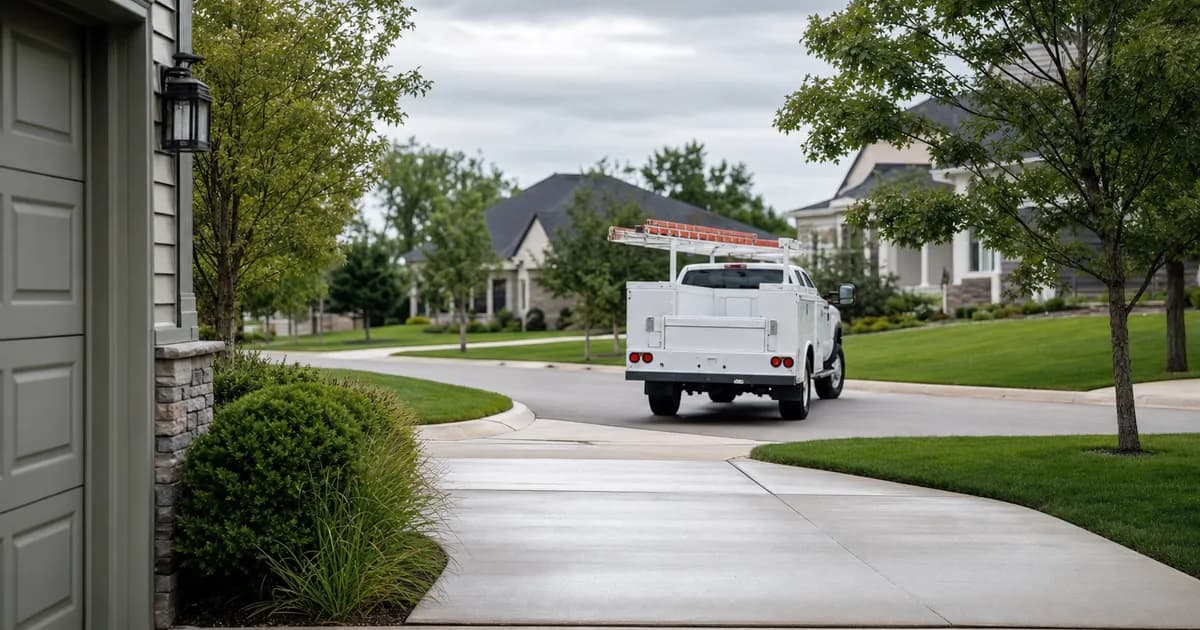
It's a Tuesday morning. The truck is loaded, the hot water rig is up to temperature, and you've mapped the route for the street you're hitting today. The phone buzzes. It's a regular customer. "So sorry, can you skip us this week? We're getting the driveway resealed and the cans are already pulled around back, catch you next month, thanks!"
You write back something easy because they're a good customer and one missed can won't hurt. Then the phone buzzes again. Two more on the same street. Both polite, both genuine, both an hour before you roll out. By the time you actually pull up to that neighborhood, the run that was going to be eight cans is going to be five. You still drove out there. You still burned the fuel and the water. The morning is still gone.
Nobody ghosted you. Everyone messaged. You were nice about it. And somehow the route still cost you money.
This is the quiet leak almost no operator has a real policy for. The forgotten-to-put-the-can-out problem has been beaten to death and everyone runs reminders now. The last-minute cancellation problem is the next-order version of it, and most trash can cleaning businesses are losing more income to it than they realize.
Cancellations aren't forgotten cleans, and the difference matters
Most operators lump cancellations and forgotten cans into the same mental bucket. They shouldn't. A customer who leaves the can in the garage with no warning is one problem, and a customer who texts an hour before you arrive is a different one, and treating them the same way costs you twice.
A forgotten can is a behavior problem. A reminder fixes most of them. Once customers know a confirmation lands the day before and a nudge lands the morning of trash day, the "oh shoot, I left it inside" cleans drop off a cliff.
A last-minute cancellation is a policy problem. The customer hasn't forgotten. They know. They messaged you. They're being respectful by telling you. They are also quietly assuming the clean is free to cancel because the system has never told them otherwise. And in most trash can cleaning businesses, they're right. There is no policy. There is no deadline. There is no consequence. There is just an operator who is too easygoing to push back and a customer who has learned that cancelling a few hours before a clean is basically fine.
That assumption is the root of the leak. Once you understand it as an unwritten contract you accidentally signed years ago, the fix gets a lot easier.
The hidden cost is bigger than the cancelled clean
The lost income from one cancellation looks small on paper. Twelve dollars for a single can on a plan. Thirty for a one-time deep clean. Annoying but not the end of the world.
It doesn't end there. The slot that just opened up at eight in the morning for a route you're running at ten is never going to be filled by another customer, because no other house on that street is sitting on your booking page deciding to sign up in the next two hours for a clean that happens today. The capacity is gone. You don't get to resell it. You already drove to the neighborhood, and that stop was always going to be paid for once, and you've now lost that one payment.
Stack that across a year. Two late cancellations a week at an average of fifteen dollars each is fifteen hundred dollars a year that should have been in the business and isn't. Most solo operators running a route on the side could double that estimate without breaking a sweat. The bigger crews with more stops usually lose a multiple of it. It is genuinely one of the largest invisible costs in a trash can cleaning business and almost nobody has it on a spreadsheet.
The wear cost stacks on top. Driving a truck to a street to clean five cans on a stop that was sold and routed for eight is the kind of thing that makes the math on the whole day look worse. You're not doing bad work. You just rolled out to a neighborhood that quietly emptied out in the two hours before you left the shop and you had no chance to refill it. Do that on a Tuesday and a Wednesday in the same week and the route starts feeling like it isn't worth the gas.
The unwritten policy is the problem
Almost every operator already has a cancellation policy. They just haven't written it down.
The policy that lives in your head is something like "if it's a real reason and you give me decent notice it's fine, if it's last minute with no real reason I'm a bit annoyed but I won't say anything, and if it keeps happening I'll quietly stop driving out for that house." That policy is reasonable and it's killing your business.
The reason it's killing the business is that none of it is visible to the customer. The customer doesn't know what counts as decent notice. They don't know if there's a charge. They don't know how many times they can do it before something happens. So they just default to the most generous interpretation. Of course it's fine. The operator hasn't said otherwise.
A written policy doesn't make you the bad guy. It makes you legible. Once a customer knows the rules, the rules govern the behavior. Most people will respect a clear cancellation window if you've told them once. Almost none will respect a vague vibe they were never actually told about.
Write the policy down before you need it
The right time to write the policy is now, not the first time you have to enforce it. The reason is psychological. Inventing a rule on the spot in response to one specific customer feels personal. Quoting an existing policy that's been there since they signed up doesn't.
A workable cancellation policy for a trash can cleaning business has three lines and fits on a single screen. It says how far in advance a customer can cancel without losing the clean. It says what happens to the clean if they cancel inside that window. And it says what counts as an exception, if anything.
The simplest version that actually works in practice is twenty four hours' notice for a free reschedule, no refund inside that window but a credit toward a future clean that expires at the end of the quarter, and a short list of exceptions for genuine situations that you handle case by case. It can be more generous than that. It can be stricter. The exact numbers matter less than the fact that the numbers exist.
Once you've written it, the policy moves from your head into the parts of the business that customers actually see. The booking page. The confirmation text. The welcome message for new customers. The plan signup page. You stop having to invent the rule each time. The system tells the customer what the rule is, you don't.
The twenty four hour rule is the one that actually changes behavior
Almost every effective trash can cleaning cancellation policy lands on roughly the same window. Twenty four hours.
The reason isn't arbitrary. It's the window that's both fair to customers and useful to the operator. Twenty four hours is enough time to re-plan the route around the gap, or skip that stretch of street entirely, or slot in a neighbor who asked to be added. Anything inside twenty four hours is too late to re-route the day, so the value of that stop is already lost the second the message lands, because you're either already rolling or about to load up for that exact neighborhood.
For customers it's also a window they can plan around. Cancelling the night before for a clean the next morning is easy. Cancelling first thing on trash day, before you've left, is still doable. Cancelling at eight when you pull up at ten is the version that quietly costs you, and it's also the version a twenty four hour rule politely discourages.
The rule does not need to be enforced harshly. It just needs to exist. Most customers never bump up against it because the late cancellations were always the exceptions, not the norm. The handful of customers doing it every cycle are the ones the policy is there for, and they self-correct the moment they realize the rule is real.
Make the policy live on the booking page, not in a follow-up text
The single most common mistake operators make when they finally write a policy is to put it in the welcome message and then never refer to it again.
A new customer reads the welcome message once. The cancellation rule lives in the sixth line and gets skimmed. Two months later the driveway is getting resealed and they fire off a casual cancellation text at eight in the morning for a ten o'clock clean and they have no memory at all of the rule. From their side, the rule never existed.
The fix is to put the policy where the booking happens. The booking page itself shows the cancellation window. The confirmation that lands after every signup restates it. The day-before reminder includes a line about it. The customer doesn't have to remember the policy because the policy is everywhere they look. By the time they hit the cancel button that morning, the screen is telling them the clean won't be refunded, here are the alternatives, would they like to use a credit toward next month.
A policy that lives in a system the customer touches every cycle is a policy that works. A policy that lives in a welcome message from three months ago is a policy that doesn't.
Stop refunding in cash, start using credits
The next move is to change what happens to the money when a late cancellation does land.
The instinct most operators have is binary. Either refund the clean entirely, which trains the customer that cancellations are free, or refuse to refund anything and hope they don't argue. Both are bad. The first one teaches the wrong lesson. The second one feels unfair and makes customers quietly resentful.
The middle path is credits. A late cancellation inside the twenty four hour window doesn't get a cash refund. It gets a credit of the same value that the customer can use toward a future clean, a seasonal deep-clean promo, an extra can, or a second property, valid until the end of the current quarter.
This works because everyone wins enough that nobody complains. The customer hasn't lost the money. You haven't lost the revenue. The credit also quietly funnels the customer back into the business in the next few weeks, which is the opposite of what a refund does. A refund sends them away. A credit pulls them back.
Done in software it's frictionless. The credit appears in the customer's account. They see it when they go to book the next clean. You don't have to chase anything, log anything, or remember anything. The credit either gets used or it expires, and either way the business keeps its margin intact.
Refill the gap before you load the truck
The other half of the cancellation problem is that the stop stays empty even when there's demand for it.
Most trash can cleaning businesses have a list of interested people somewhere. Neighbors who asked about it on trash day and never quite signed up. Houses two doors down from a current customer who said "let me think about it." Customers on a single can who'd happily add their recycling cart if you nudged them. None of those people have any idea when a gap opens up on their street, because you haven't told them.
The right move is to make the open stop visible to the right people the moment it frees up. Someone on that same block gets a message when the eight a.m. cancellation lands. "We're cleaning your street this morning, want us to add your cans while we're already out front? First to reply gets the spot." Route density is everything in this business, so a stop you're already driving past is almost free margin. The morning that would have been five cans is back to eight by the time you load the truck. The cancellation cost is recovered before you've even left the shop.
The list isn't just for new signups. It's the live inventory of demand on each street that you can route into any sudden gap. The same mechanic that fills a new block when you launch on it is what saves the stop a late cancellation just emptied.
Operators who run this well rarely lose income to cancellations at all. The cancellations still happen. The gaps almost always refill with a neighbor who was already on the street. The net is the same as a fully booked stop, the customer who cancelled has a credit to use later, and the neighbor who jumped in feels like they got lucky. Everyone is mildly better off than they were an hour ago.
Treat the chronic cancellers like a different problem
There is one group of customers that no policy will fix on its own. The chronic cancellers.
Every trash can cleaning business has two or three customers who cancel disproportionately. Not because of a one-off situation. Because the clean is the easiest thing in their month to drop when something else comes up. They sign up in good faith, but they treat the commitment as soft, and over a quarter they end up skipping half the cleans they paid for.
A blanket policy won't change that customer. They'll just keep doing it. What works is a quiet, direct conversation. A short message that says something like "we've noticed your cans got skipped on about half of the last few cleans, and we want to make sure the plan is still working for you. Would it help to step down to a quarterly clean, or switch to a one-time deep clean when you actually need it?" Done plainly it lands as a thoughtful check-in. It also surfaces the real situation, which is usually one of three things. The customer never really needed monthly and is too polite to say. The pickup schedule changed and your timing stopped lining up with their trash day. Or they wanted to cancel a month ago and have been quietly paying without getting around to it.
In all three cases you'd rather know. A paid but unused stop is the worst version of every outcome. The customer is paying for something they're not using. The stop is taking a slot on a route a real customer would happily fill. A simple message converts most of those situations into either a real conversation or a clean exit, both of which are better than the slow drift.
Let the system carry most of this in the background
Almost nothing in this post is technically hard. The problem is that all of it has to happen in the same fifteen minutes that a one-line cancellation text lands on your phone while you're loading the truck.
You can't write the policy at eight in the morning. You can't message the neighbors at eight oh one. You can't issue a credit at eight oh five. You can't track who's chronically dropping at the end of the quarter. The volume of in-the-moment admin makes the whole thing collapse, and almost every operator who tries to enforce a cancellation policy by hand quietly gives up within a couple of months.
This is exactly the kind of work that proper trash can cleaning software is built to absorb. BookNimble gives you a branded booking page where customers see your plans, sign up, and pay, with the cancellation policy shown right there at signup and on every confirmation. Recurring payments run automatically through Stripe, reminders go out before each clean, and a dashboard shows exactly who is due and who has paid. The cancel button enforces your window for you, credits get issued without you touching anything, and the customers who keep skipping show up on a simple list you can scan at the end of each quarter. It takes about ten minutes to set up, there's no monthly fee, and you only pay when you get paid. The cancellation that lands while you're loading the truck doesn't need a reply, because the system has already done what you would have done if you'd been at a laptop.
The bottom line
A trash can cleaning business that treats every cancellation as a one-off favor is a business that is quietly subsidizing every customer who learns to lean on the favor. That is almost never the customers you'd want to subsidize. It's a small percentage who default to cancelling whenever something more convenient comes up, plus a normal spread of everyone else who simply hasn't been told what the rules are.
Write the policy down. Twenty four hours is the window that works for almost every route. Inside that window, credits beat refunds, because they protect the margin and pull the customer back into the business. Put the policy where the customer books, not where they signed up. Refill the open stop the second it frees up, with a neighbor who's already on the street, before you've even loaded the truck. Have the direct end-of-quarter conversation with the customers who skipped half their cleans, because what looks like a retention problem is often a fit problem that wants to be named. And let the software carry the admin so none of this becomes another job for your phone.
Do that and the late cancellations that used to feel like an unavoidable part of running a route turn out to have been a policy gap all along. The income that used to leak out of every trash day stops leaking. The street that was sold for eight cans is back to being cleaned at eight, or at seven plus a credit and a neighbor who jumped in. And the polite "so sorry, skip us this week" text at eight in the morning stops being the start of a worse day. The system handles it. You drive the route. You clean the cans you planned to clean. The business carries on without you having to defend it.
Most operators think their cancellation problem is a customer problem. It's almost always a policy problem. Fix the policy and the customers follow.
Ready to grow your cleaning business?
Take signups, recurring payments, and reminders in one place with BookNimble.
Related Posts

How to Price Your Trash Can Cleaning Service Without Leaving Money on the Table
Most operators set their first price too low and stay on it for years. Here's how to price a trash can cleaning service so the route runs profitable from day one.

How to Run a Year-End Customer Appreciation Push That Locks In Renewals
A simple year-end thank-you is the cheapest retention you'll ever run. Here's how to use it to lock in plan renewals for next year on your trash can route.