How to Get Customers to Leave Google Reviews Without It Feeling Awkward
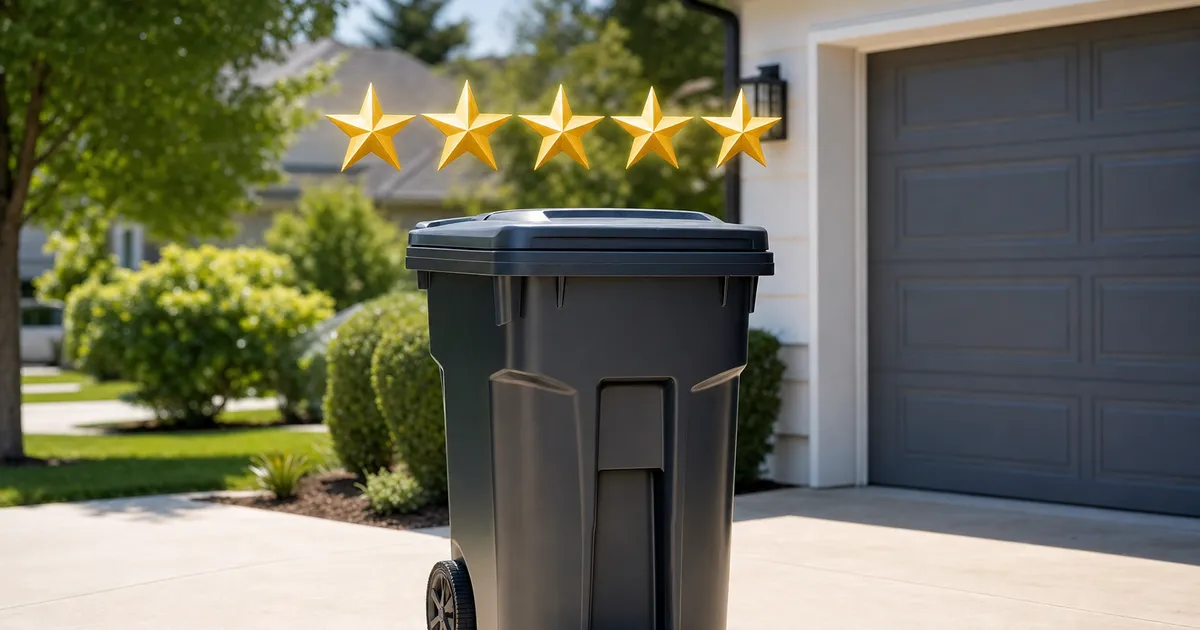
Every operator has had the same moment. You pull the cans back to the curb, gleaming and not stinking for the first time all summer, and the customer comes out to look. They are genuinely thrilled. They tell you the can used to make them gag every time they opened the garage. They tell you their neighbor asked who did it. They tell you this is the best ten bucks a month they spend. You smile, say thanks, load the rig, and feel quietly great for the rest of the day.
A year later your business has eight reviews on Google. The pressure washing guy two zip codes over has ninety four.
This is the gap that quietly decides which trash can cleaning businesses grow and which ones stay the same size. It isn't the equipment. It isn't the price. It's whether anyone ever actually asked.
Reviews are the marketing nobody pays for and almost nobody runs
The reason Google reviews matter so much for a local trash can cleaning business isn't that they make you look credible, although they do. It's that they decide whether you exist at all.
When somebody in your area types "trash can cleaning near me" or "garbage can cleaning [town]" into Google, the local results are ranked almost entirely on review count, star average, and how recent the reviews are. Three reviews and you're invisible. Forty reviews from the last twelve months and you're at the top of the local pack, above outfits that have run trucks for years. The customer never reads them all. They read the first three, glance at the stars, and tap.
Most operators lose dozens of inbound leads every month to a business that isn't doing a better clean. It's just easier to find. The fix is almost free. It's just admin nobody bothered to set up.
Stop hoping, start asking
The single biggest reason operators don't have reviews isn't that customers don't like them. It's that customers have never been directly asked.
People are busy. They love what you do. They genuinely intend to leave a review one day. Then dinner needs making, the dog needs walking, and the moment passes. Six months later, when it crosses their mind again, the feeling has cooled and the review they would have written the week of that first clean never gets written at all.
The operators who have proper review counts have stopped relying on the customer thinking of it on their own. They ask, directly, at the moment the feeling is at its hottest, and they make the act of leaving the review take ten seconds rather than ten minutes. Nothing about that is pushy. It's just acknowledging that warm intent decays quickly, and that nobody else in the customer's week is going to remind them.
Pick the right moment, every single time
Timing is the most undervalued part of getting reviews.
The right moment is right after a high. Right after a great clean, while the cans are still glistening at the curb and the before-and-after is fresh in their mind. The afternoon you knock out the first deep clean on a really nasty pair of cans. The week a customer just signed up for the year and feels good about the decision. These are the moments where the answer to "would you mind leaving us a quick review" is almost always yes.
The wrong moment is in the middle of admin. After a payment reminder. While you're rescheduling a clean you missed because of a route change. The day after a customer had a small grumble about a can being put back on the wrong side. Asking in those moments doesn't just fail to get the review. It makes the customer quietly less likely to leave one later, because you've now associated the ask with a slightly off feeling.
The operators who get this right have a small rule. Ask after a great clean, never after admin, and ask soon enough that the feeling is still warm. That alone changes their review count more than any clever wording ever will.
Ask in a way that doesn't make either of you cringe
How you ask matters more than most operators realize. A long, formal request feels like a favor. A short, direct one feels like a normal part of running a business.
The line that works for almost everyone is some version of this. "If you've got thirty seconds, a quick Google review would mean a lot. It's basically how new customers on the street find us." That's it. You're not begging. You're not over-explaining. You've told them why it matters in one short sentence, and you've signaled that this isn't going to take their evening.
People almost never say no to that. They say "of course, send me the link." Which is the bit where most operators lose the review, because the link doesn't arrive, or it arrives the next day buried under three other texts, and by then the moment has passed.
Make the link a one-tap thing, not a treasure hunt
Once a customer has agreed, you have about an hour to make it actually happen. After that, real life takes over and you've lost them.
The clean version of this is a direct Google review write-link, sent within a minute of the conversation. Not a "here's our Google page" link. The proper review link, which opens straight into the review form on the customer's phone, with the stars and the text box already there. Five taps and it's done. Find your link once in your Google Business profile, save it somewhere you can grab in three seconds, and use the same one every time.
If the customer has to search for your business on Google, scroll past three other cleaning outfits, find the right one, tap "write a review," and figure out where to type, you have lost about half of the people who genuinely meant to do it. The friction wins. Friction always wins.
The operators with proper review numbers have made this a copy-paste operation. The clean ends, the link goes out, the review lands that evening.
Build the request into the normal rhythm of the business
The operators with eighty plus reviews are not asking eighty customers at random. They've built the ask into the regular flow of the business.
After a first clean lands, every new customer gets a short thank-you text that includes the review link. After someone's been on a plan for a few months and clearly loves it, they get a check-in with the link. When a customer renews for another year, they get a quick note thanking them and inviting them to leave a review if they have a minute. Each of these moments is a natural high. Each one converts at a meaningful rate. None of them feels weird, because the request is wrapped inside a real human moment that was happening anyway.
This is the difference between a business that gets one review every two months by accident and a business that gets four or five every month on purpose. Same customers, same work, very different visibility on Google.
Don't be afraid to follow up once
A surprising number of customers say yes, fully intend to do it, and then never get round to it. That isn't them being rude. It's them being human.
A single, gentle follow-up a few days later catches a meaningful share of these. "Hi Dave, just a quick nudge. Totally fine to ignore if it's slipped down your list, but if you've got a moment, here's the link again." That is not being pushy. That is recognizing that one text in a busy week often gets buried under thirty others.
The rule is one follow-up, then never again on that specific ask. If a customer doesn't respond after the gentle nudge, leave them be and try again in a few months at the next natural high. Chasing people repeatedly for reviews is the fastest way to make them quietly resent you. One ask, one nudge, then stop. Every time.
Reply to every review that lands
When a review lands, reply to it. Every single one.
This is the part most operators never bother with, and it costs them more than they realize. A short, warm public reply on the review itself does two things. It shows future customers reading your reviews that you are a present, professional business. And it tells the algorithm that the listing is active, which quietly improves how often you appear in local searches.
You don't need to write paragraphs. "Thanks so much, really glad the cans are smelling better. Great to have you on the route." That is enough. Three sentences, ten seconds, and you've turned the review from a static piece of text into an actual conversation that other customers can read while they're deciding whether to sign up.
If you ever get a less than perfect review, the same rule applies. Reply once, calmly, with no defensiveness, in a way that signals you take feedback seriously. Future customers read those replies more carefully than the review itself. A good response to a poor review often does more for your reputation than the average five star one.
The operators who automate this stop having to remember
The reason most operators never get into a rhythm with reviews is that asking, sending the link, and following up is one more thing to remember in an already full week. The first month it works. By month three it has quietly stopped happening because something more urgent is always in the way.
This is exactly the kind of work that proper trash can cleaning software exists to take off your plate. The right setup means a customer whose first clean just landed gets a thank-you text with a review link automatically. A customer who renews for another year gets a follow-up a week later. The link is the same every time, the timing is the same every time, and you don't have to remember a single thing.
BookNimble is built around exactly this kind of automated follow-up. You get a branded booking page where customers see your plans, sign up, and pay, with recurring Stripe payments running on their own and reminders going out before each clean. On top of that, you write the review message once, set the trigger once, and every customer who hits that moment in your business gets the right ask at the right time, in the right tone, without you ever sitting at your laptop chasing reviews on a Sunday night. Ten minutes to set up, no monthly fee, and you only pay when you get paid. The version of you on a freezing Tuesday in February is still asking for reviews properly, because the system is doing the asking.
For most operators this is the difference between a Google profile where reviews trickle in by accident and one that quietly compounds month after month, pulling in new customers on its own.
Don't bribe, don't pressure, don't fake
A short note on what not to do. Some operators, frustrated with low review counts, start offering a free clean or a discount in exchange for reviews. Don't. Google's policy explicitly bans incentivized reviews, and they will remove your reviews, and sometimes your whole listing, if they spot a pattern. The downside is genuinely larger than the upside.
Equally, don't ask family or friends to write reviews. Don't write reviews using your own accounts. Don't ask the same customer to leave the same review on three different platforms in the same week. The whole point of reviews is that they're real, and people reading them can usually tell when they aren't. A small number of honest reviews from actual customers is worth more than a faked number that crumbles the first time someone looks twice.
The path is slow, honest, and consistent. Done properly for six months, you'll quietly be ahead of every operator in your area who didn't bother.
The bottom line
The reason your trash can cleaning business looks smaller online than it actually is almost certainly comes down to one thing. Nobody asked.
Reviews are the most important free marketing channel a local trash can cleaning business has, and the one most operators never set up properly. The fix isn't dramatic. Ask at the right moments. Send the link in one tap. Follow up once if they forget. Reply to every review you get. And let the software do the remembering for you, so the asks keep happening even when your week is full.
Do that for a year and your Google profile starts looking like the inside of a business twice your size. New customers in your area find you first. Signups start arriving without you having to chase them. The growth that felt so hard before begins happening on its own, in the background, on a Tuesday morning, while you're actually out on the route.
The reviews were always there. The customers wanted to leave them. They were just waiting for someone to ask.
Ready to grow your cleaning business?
Take signups, recurring payments, and reminders in one place with BookNimble.
Related Posts
How to Get Your Trash Can Cleaning Business Found on Google Without Paying for Ads
Most of your future customers search 'trash can cleaning near me' before they ever call. Here's how to show up on Google for free with local SEO.
How to Reduce Missed Cleans and Stop Losing Money
Every can left in the garage on cleaning day is money you don't earn. Here's how to cut missed cleans with reminders, routing, and the right plan terms.