How to Get Your Trash Can Cleaning Business Found on Google Without Paying for Ads
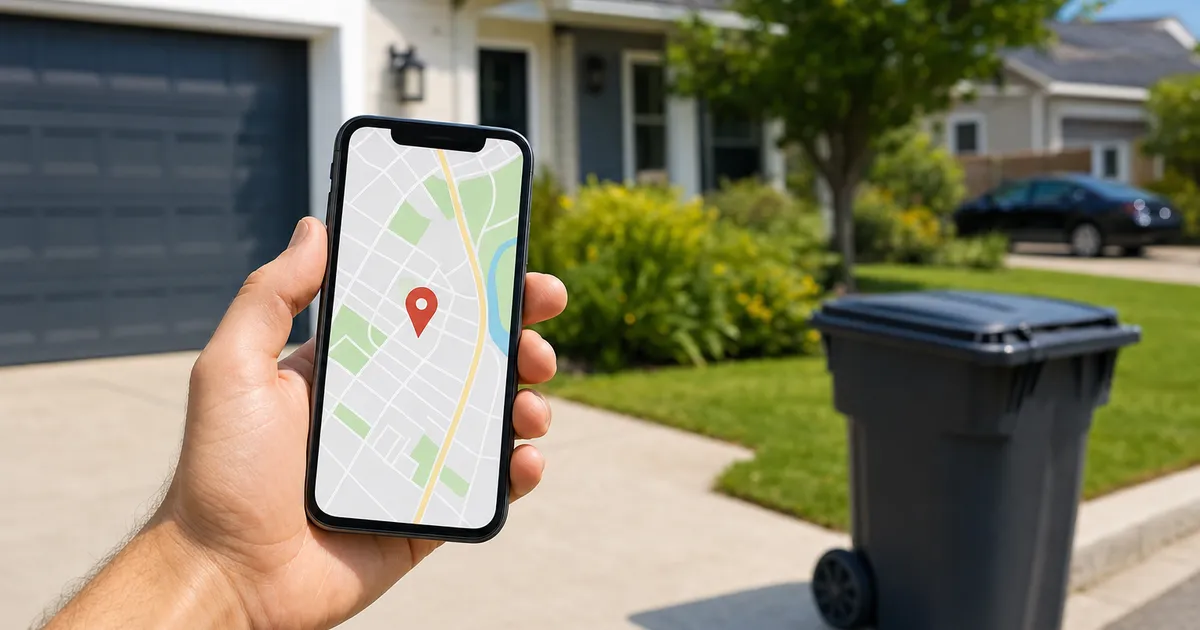
A homeowner moves into a new neighborhood, gets one whiff of the garbage can the previous owner left to rot in the garage, and types "trash can cleaning near me" into their phone over morning coffee. Three businesses pop up on the map. A pressure washing company that cleans cans as an afterthought, a national franchise with a slick truck and a call center two states away, and a handyman whose website hasn't been touched since 2019. The actual best operator in the area, the one with the tightest route and a hundred happy customers on quarterly plans, is on page two. The homeowner never gets to page two.
This is happening every day in every zip code in the country, and it's the silent reason most trash can cleaning businesses grow slower than they should. The clean is fine. The price is fine. The customers who do find the business love it. But the homeowners who don't know it exists yet are quietly signing up with someone worse, because the worse business turned up first when they searched.
Showing up properly on Google is one of the few growth levers a trash can cleaning business can pull that compounds for free, and almost nobody does it on purpose. Here's how to do it, in the order that actually moves the needle.
The Google search nobody runs is the one that matters
Most operators know how their own website looks, because they spent a few hundred bucks building it and check it once a month. They have absolutely no idea what a homeowner in their town actually sees when they search for what they offer.
Open an incognito tab and search "trash can cleaning" plus your town name right now. Scroll past the ads at the top. Look at the local pack, which is the three businesses Google shows on a map with their reviews and a tap-to-call button. That is the entire game for local service work. Roughly seventy percent of clicks on a local search go to those three results. If you're not in them, you don't exist for that homeowner on that day.
The operators who never check this assume they're somewhere on the page. Most of them are nowhere on the page. The first time you actually look, the work this post describes becomes a lot more obviously worth doing.
Set up the Google Business Profile properly, because most operators never have
The Google Business Profile is the single biggest lever in local search and the one most operators treat as a tick-box.
You sign up once, you put your phone number in, you pick "cleaning service" as the category, and you forget about it. Six months later your profile has no photos, no posts, three reviews, the wrong service area, and Google has quietly decided you're not really an active business. The local pack goes to a pressure washing company that filled out their profile properly two years ago, and you wonder why the customer down the street hasn't signed up.
A profile that actually works has the right primary category, three or four secondary categories that match how people search, your real service area mapped out by zip code, twenty plus photos that show actual before-and-after cleans and not stock images, your real hours updated when they change, and a description that reads like a human being wrote it. None of that is hard. It just has to be done once, properly, and kept current.
The operators who set this up tightly often jump four or five places in the local pack inside two weeks without doing anything else. The work everyone else hasn't done is the work that quietly wins the search.
Pick the categories and the area customers actually search in
The category you choose decides which searches you show up in. Most operators pick the wrong one.
If you clean trash cans and you set your primary category to "Pressure washing service," you may not appear when a homeowner searches "garbage can cleaning." That isn't the search Google maps cleanly to that category. The right primary category is normally "Cleaning service" or, where it's available, something closer to "Trash collection" or "Sanitation service." Then you add secondary categories like "Pressure washing service," "Junk removal service," and "Disinfecting service," depending on what you actually run.
The service area is the other thing nobody gets right. Most operators set their service area as their home town and stop there. If you actually run a route through five surrounding neighborhoods and three nearby suburbs, you set your service area to all of them, by zip code. Each zip code you cover honestly is one more local search you can appear in. This isn't gaming the system. It's telling Google the truth about where your route runs.
Spend twenty minutes on this once and you'll quietly start showing up in searches you didn't know you were missing.
The photos and the description do the silent selling
Once a homeowner sees your business in the local pack, the next thirty seconds decide whether they tap your name or scroll on to the next one. The photos and the description do almost all of that work.
Stock images of sparkling clean cans and clipart trucks destroy your conversion. Real photos of your actual work do the opposite. You don't need a photographer. You need ten reasonable phone photos. One of a filthy can at the curb on trash day, one of the same can spotless thirty seconds later, one of your rig parked on a street so people can see you're a real operation, one of the dirty water being reclaimed into your tank, one of a row of clean cans down a driveway. The homeowner reading these is asking themselves whether this is a real thing or a website. Before-and-after photos answer that in a way no text ever does.
The description should not read like a brochure. Two short paragraphs in the voice you'd actually use with a customer at the curb. Who you clean for, where, what makes the service different, and how to sign up for a plan. No buzzwords. No mission statement. Homeowners have read the buzzwords on twenty other websites this week. The thing that wins is a description that sounds like the human being who runs the business, because it is.
Build a page on your website for every neighborhood you serve
Most trash can cleaning businesses have one website with one homepage that lists all their service areas in a paragraph. Google reads that as "a business, somewhere, that cleans some cans." It does not read it as "a business that cleans trash cans in Maple Grove, Brookside, and Cedar Park."
The fix is one proper page on your site for every neighborhood or town you serve. The page has the name of the neighborhood and the town in the headline, the zip code and a map embed, the trash day you run that route, the plans you offer, the price, and a sign-up link. It also has two paragraphs about that specific area, written for the homeowner who lives there. Not stuffed with the town name fifteen times, just written like a human who genuinely knows the route.
Google quietly loves this kind of page because it answers a real local question. Homeowners searching "garbage can cleaning Brookside" land on the Brookside page, not on a homepage that mentions Brookside in passing. The conversion is much higher because the page is specifically about where they live, and Google knows it.
A small operation with three service areas should have at least three of these pages. A bigger one should have one for every neighborhood it runs. The work is genuinely worth doing once. The pages keep ranking for years.
Use the words customers type, not the words operators use
Operators write about their business using operator language. Reclaim systems, hot-water units, route density, recurring SKUs. Homeowners do not search any of these words.
Open your phone and type the first letter into Google search for the kind of business you run. The autocomplete will show you what real people type. "Trash can cleaning near me." "Garbage can cleaning service." "How to clean a smelly trash can." "Bin cleaning [your city]." The exact phrasing matters. A page titled "Recurring Sanitation Solutions" will not rank for any of those queries. A page titled "Trash Can Cleaning in Cedar Park" will.
This isn't about stuffing your site with keywords. It's about writing your service descriptions, page titles, and headings in the same plain English a homeowner would use to find you. Half the operators you'll be competing against don't do this, because they're writing for other operators, not for the customer searching at half past seven on a Sunday evening with a garbage can stinking up the garage.
Get listed where the local algorithm looks
Google trusts local businesses more when other local sites list them. This is the boring side of local search and it actually moves the needle.
The ones worth the time are your local Chamber of Commerce, your city or HOA community pages, neighborhood newsletters, your Nextdoor business page, and the better-known directories like Yelp, the Better Business Bureau, and Angi. Each one is a citation, which is a public mention of your business name, address, and phone number on a site Google already trusts. Five clean citations from real local sites are worth more than fifty from junk directories.
Skip anything that asks you to pay a couple hundred bucks a year to be listed. Skip "premium" SEO directories that nobody has ever visited. They don't help, and a few of the worst ones can quietly hurt. Stick to local, real, and obviously trusted. Spend an afternoon on this once and don't look at it again for a year.
The other thing worth doing while you're at it is making sure your business name, address, and phone number are written exactly the same way on every single one. Different formats confuse Google, and the algorithm quietly downgrades businesses whose details look inconsistent across the web.
Backlinks from HOAs, local groups, and the local press
A backlink from another website is a vote of confidence in yours, and the local pack rewards businesses that have a few of them from the right places.
The good news is, as a trash can cleaning business, you already have natural sources. The HOA whose community you clean for can link to you from their approved-vendors page. The property manager who hired you for a row of rentals can list you on their site. The local paper will run a piece on the new small business cleaning up the neighborhood if you give them a story worth writing about. The admin who runs the local "what's happening" newsletter will mention your launch promo if you ask politely.
You don't need to be aggressive about any of this. You ask once, kindly, with a short description and a link they can paste. Most local sites are happy to link to a real local business doing something useful. Three or four of these in a year, from real local sites with real audiences, is more powerful than a hundred backlinks from random SEO farms.
Reviews are the signal that ties everything else together
This deserves its own treatment, but the short version for the purposes of search ranking is this. The local pack is heavily weighted by review count, star average, and how recent the reviews are. A profile with forty fresh reviews from the last twelve months will outrank a profile with a hundred reviews from five years ago.
If you do nothing else this quarter, ask three customers per week for a review at the right moment, right after they walk out and see their can spotless and odor-free, reply to every review you get, and watch your local ranking tighten up over the following two months. Reviews are how Google decides whether you're a real, active business that real, active homeowners recommend. Everything else in this post is a setup for that signal to land properly.
How a proper booking page does half the SEO work for you
The thing that quietly determines whether all this local search work pays off is what happens when the homeowner finally taps your name. If they land on a website that loads slowly, has a contact form they fill out and never get a reply from, or sends them to some clunky payment link that breaks on mobile, the search ranking you worked for converts to nothing.
The right tool removes most of this. BookNimble gives every trash can cleaning business a fast, mobile-first booking page where customers see your plans, sign up, and pay, all in one place. Each page carries your service area, the plan options, the price, and a one-tap sign-up flow, with automatic recurring Stripe payments and reminders sent before each clean so cans are out at the curb on time. You get a dashboard showing exactly who is due and who has paid. It takes about ten minutes to set up, there's no monthly fee, and you only pay when you get paid. The pages load fast on the worst possible cell signal at the end of a driveway, and none of it has to be wired up by hand.
For most operators this is the difference between local SEO that quietly works and local SEO that sends two hundred visitors a month into a homepage that doesn't convert. The booking page is where the whole funnel either pays for itself or falls apart, and most operators have never built one that does the job properly.
The bottom line
The best operator in your area is almost never the most-booked operator in your area. The most-booked operator is the one a homeowner could find when they typed three words into a phone over morning coffee.
Setting up your Google Business Profile properly, picking the right categories, writing the description like a human, building a real page for every neighborhood, using the words customers actually search, getting clean local citations, asking for reviews at the right moments, and putting the whole thing onto a booking page that loads fast and converts. None of it is hard. None of it costs much. All of it compounds, quietly, in the background, while you're actually out on the route.
Do the work once, properly, and the homeowner searching for trash can cleaning on a Sunday evening sees you first instead of the franchise with the call center two states away. The signups start arriving without you doing anything new. The growth that felt so hard before begins to happen on its own.
The customers were always there. They were searching. They just couldn't find you.
Ready to grow your cleaning business?
Take signups, recurring payments, and reminders in one place with BookNimble.
Related Posts
How to Get Customers to Leave Google Reviews Without It Feeling Awkward
Reviews are what turn a 'trash can cleaning near me' search into a booking. Here's how to get customers to leave them without the awkward ask.
How to Reduce Missed Cleans and Stop Losing Money
Every can left in the garage on cleaning day is money you don't earn. Here's how to cut missed cleans with reminders, routing, and the right plan terms.