How to Handle Bad Weather Without Losing a Day's Revenue
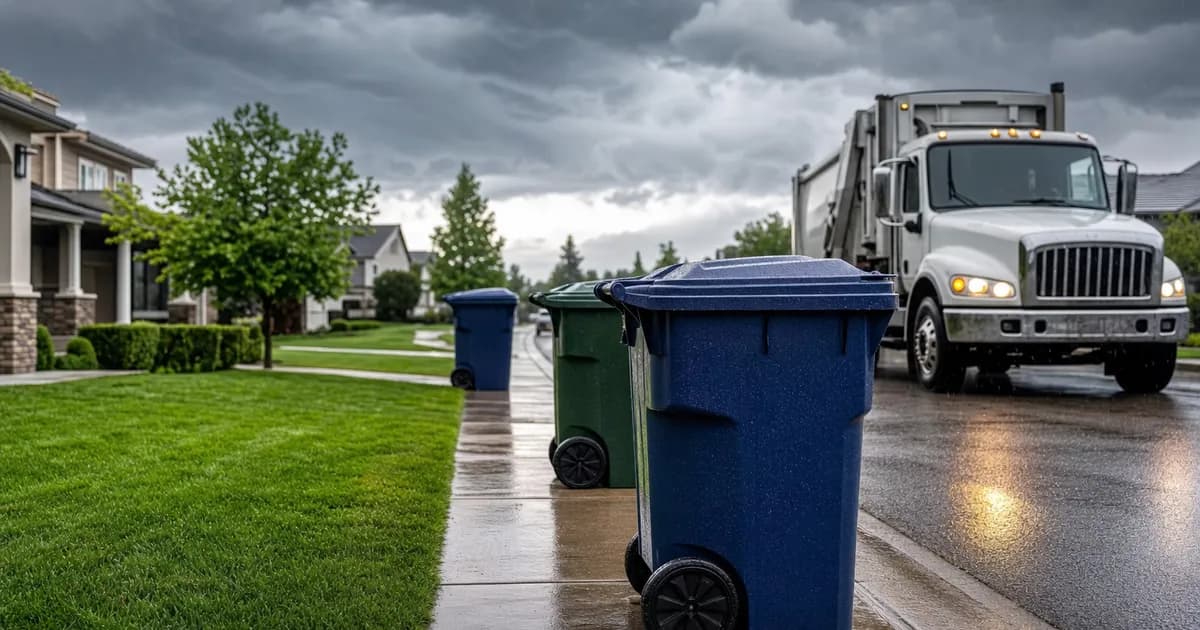
Every operator has had the same morning. You wake up, check the forecast, and the temperature dropped overnight to a hard freeze. The route you mapped for today runs forty cans across two streets, and now you're staring at the question of whether your water lines are even going to flow. Your phone buzzes. A customer wants to know if you're still coming. You haven't decided yet, you're loading the truck, and the next eight hours of your week are about to come down to one call you didn't really plan for.
This is the part of running a trash can cleaning business that nobody warns you about. The actual cleaning is fine. The weather around the cleaning is what quietly breaks your week and, over a year, costs you more money and goodwill than almost anything else.
The good news is that handling it properly isn't complicated. You just need to decide how it works in advance, instead of inventing the rule in the snow.
Weather is the only emergency that happens every winter
Most operators treat weather disruptions as one-off events. Storm hits, you scramble, you sort it, you forget about it until next time. Then next time arrives two weeks later and you scramble again from scratch.
That framing is the problem. Weather isn't an emergency. In a lot of regions a cleaning day getting threatened by a hard freeze, an ice storm, heavy snow, or just enough cold to freeze your equipment and the gunk in the cans happens dozens of times across the winter for the average operator. It's a regular event you should have a regular system for, the same way you have a system for new signups or seasonal deep-clean promos.
Once you treat it as routine, two things change. The decisions get faster, because you've made most of them already. And the customers stop being anxious about it, because they can see you have a plan that works the same way every time.
The cost of getting it wrong is bigger than operators think
It's tempting to look at a single frozen-out day and shrug. One day lost. A few hundred dollars of revenue gone. Annoying but not the end of the world. You'll make it back next week.
That undersells the actual damage. The day itself is the smallest cost. The bigger ones are hidden.
A panicked round of last minute messages tells a customer the operation is held together with string. A confusing back-and-forth about whether you're coming or not makes the whole business feel slightly amateur. A refund issued out of guilt sets a precedent every other customer on the route quietly notices. And the customer who left their can out on the curb all day, in the cold, because they never got a clear answer, has just lost a little trust in you over something you could have prevented with one text.
Add a winter's worth of those and the real cost of a bad weather policy isn't the lost cleaning fees. It's the customers who quietly start looking at the operator two zip codes over because at least they always seem to know what's happening.
Decide your policy before the cold ever hits
The single biggest fix is also the most boring. Sit down for an hour, on a warm day, and write down exactly how weather disruptions work in your business. Not in your head. On the booking page. In the welcome email. In a place every customer has seen before they ever sign up for a plan.
It needs to answer five questions in plain language. Who decides if a cleaning day is on or off. By when, exactly, that decision is made. How customers will be told. What happens to their plan if a clean is skipped. What happens if a customer asks you not to come on a day you're still running.
That's it. Five sentences. Maybe ten if you want to be generous. The version that lives in your head is the version that produces a different answer every time, because you're tired, or it's the second freeze in two weeks, or this particular customer is the one who always pushes back. The version that lives on the booking page produces the same answer for everyone, and that consistency is the part that builds trust.
Operators who write this down once almost never have a heated weather conversation again. The conversation is over before it starts, because the rule was visible from the moment the customer signed up.
Make the call early, not at the last minute
The biggest unforced error in weather disruptions is timing the call wrong.
Most operators wait until the last possible moment to decide. They want to be sure. They check the radar at 6am, then again at 7, hoping the freeze will lift or the snow will hold off. Eventually they call it after the trucks should already be rolling. By then half the customers have already wheeled their cans out to the curb expecting you. The other half are out the door for work with no idea what's happening. The people who hear from you late aren't grateful you held out hoping. They're annoyed you didn't decide sooner.
The operators who handle this well make the call earlier than feels comfortable. If a day is in genuine doubt the night before, they tell customers that evening or first thing in the morning. Even if there's a small chance the weather breaks your way, the certainty of an early call is worth more than the slim chance of a saved cleaning day.
A useful rule is to set a fixed call-by time and put it in your policy. "If weather forces us to reschedule, you'll hear from us by 7am that morning." That gives customers room to plan around their trash day. It gives you a clean cut-off so you stop refreshing the forecast. And on borderline days where the call is genuinely close, you've already pre-committed to deciding earlier than your instincts would.
Communicate the change in one place, not five
Once the call is made, the next problem is broadcasting it cleanly.
The pattern most operators fall into is a scatter of individual texts, an Instagram story, a couple of replies to DMs, and a hope that the customers who don't use any of those will somehow find out. They don't. Two customers leave their cans out all day in the cold. You end up texting each of them separately to apologize, and the trust takes a small hit even though skipping the day was the right call.
The fix is to have one channel that customers have agreed is the official channel. The booking system, the email on the account, the number on file for reminders. One place. Every customer knows that's where weather news comes from, because you've told them that's where it comes from from day one.
You can absolutely also post it to Instagram, reply to the early questions, and answer your DMs. But the official notice goes out through one channel, at the same time, to every customer on that day's route at once. Anything else is supplementary. Anything else as the primary channel is how customers fall through the gaps.
Don't refund. Reschedule.
This is where most operators lose more money than they need to.
A clean gets skipped, the customer asks for money back, the operator feels guilty about the weather, a partial refund gets processed, and now there's a hole in the month's revenue for a clean that's still going to happen anyway. Multiply that across a winter of disrupted days on a full route and the loss is genuinely meaningful.
The cleaner answer is to reschedule, not refund. The clean moves to the next dry day, or the customer's recurring plan simply carries on uninterrupted with that visit folded into the schedule. The money stays in the business. The customer doesn't actually lose anything, because they're going to get the clean they paid for, just a few days later. Nobody is worse off and you haven't bled out a chunk of revenue every time it dropped below freezing.
Make this the default and put it in the policy. "If weather forces us to skip a clean, your plan continues as normal and we catch your cans on the next available day." Customers almost never push back on a reschedule, because it isn't a real loss to them. They push back on skipped cleans where the money seems to disappear and the next visit is unclear, which is a completely different and worse experience.
The exception is the rare case of a customer leaving the plan entirely. A genuine prorated refund there is fine and right. But the routine weather day should default to a reschedule, every time, automatically.
Keep the recurring billing intact through a weather day
The operators who really separate themselves on this are the ones who realize a skipped day doesn't have to mean a skipped charge.
This trips people up because it feels wrong at first. You didn't clean the cans, so surely you shouldn't bill for them. But a recurring plan isn't a per-clean transaction. It's a promise to keep someone's cans handled all winter, and a single freeze that pushes one visit back by a few days doesn't break that promise. The customer signed up for the year, not for a specific Tuesday.
So the recurring charge runs on schedule and the skipped clean gets caught up on the next dry day. That's the whole point of selling plans instead of one-off cleans: the revenue is smooth even when the calendar isn't. An operator who pauses billing every time it snows has quietly turned a stable recurring business back into the lumpy one-off model they were trying to escape.
If catching up the same week genuinely isn't possible, fold the missed visit into the schedule however it fits: the next regular cleaning day, an extra stop at the end of the month, a slightly longer clean next time to make up for it. Anything where the customer ends up with the service they paid for is better than anything where they end up with a refund and a half-finished month.
The follow-up message is part of the service
When a day gets pushed, most operators send the heads-up and stop there. The whole interaction lasts thirty seconds and feels purely transactional.
A short follow up the same day turns the moment into something completely different. A two-line message confirming the new day, telling them they don't need to do anything, and including a small detail that sounds human. "Had to hold off today, the lines were frozen solid by 6am and I'd have made a mess of your driveway. I'll catch your cans Thursday." That's it. The tone is the part the customer notices. The skipped day was a non-event. The follow up was you running a real operation.
It also closes the loop on the billing. A surprising number of refund disputes happen weeks later, when a customer sees a charge on their statement and can't remember what happened to that week's clean. A short message in the moment, with the reschedule confirmed in writing, cuts that conversation off entirely.
Protect your equipment before the cold does
There's a version of this problem that has nothing to do with customers and everything to do with your gear. A hard freeze doesn't just block access to the curb. It can crack a pump, split a hose, and freeze the water sitting in your lines overnight, and then you're not cancelling one day, you're down for a week waiting on parts.
This is the part of cold-weather operating that separates the people who last from the people who burn out their first winter. Drain your lines and your tank at the end of a freezing day. Store the rig somewhere it won't freeze solid, or run antifreeze through the system if you can't. Warm the equipment before the first stop instead of trying to push frozen water through it. The gunk in the cans freezes too, so a can that's a sheet of ice inside isn't getting cleaned no matter how good your pressure is, and forcing it just wastes hot water and time.
None of this is complicated, but it's the difference between a weather day that costs you a few reschedules and a weather day that costs you the truck for a week. Build the cold-weather routine into how you close out every freezing day, the same way you built the wastewater recovery into how you finish every job.
Software that holds the policy for you
Almost all of this falls apart if you have to do it manually every time. The policy on the booking page only matters if it's actually on the booking page. The reschedule only works if the plan keeps running without you having to fix the billing by hand. The notification only goes out cleanly if it reaches every customer on the route at once, through the channel they signed up for.
This is the kind of thing proper trash can cleaning software should be doing on your behalf. The weather policy lives on the booking page where every customer has to read it before they pay. When you push a day, the system messages every affected customer at the same time. The recurring billing keeps running, and moving the visit to a new day takes a couple of taps. None of it requires you to remember to do anything in the middle of a frozen morning.
BookNimble is set up around exactly this kind of flow. You get a branded booking page where customers see your plans, sign up, and pay. Recurring payments run automatically through Stripe, so a skipped clean never means a skipped charge. Reminders go out before each clean, and when weather forces a change you can notify every customer on that day's route at once and reschedule them without touching a spreadsheet. A dashboard shows exactly who's due and who's paid. Ten minutes to set up, no monthly fee, and you only pay when you get paid. The version of you scraping ice off the truck at 6am is doing exactly the same job as the version of you on a quiet summer morning, because the structural part is already done.
The operators who run this kind of system don't have a different relationship with the weather. They get the same freezes and storms as everyone else. They just stop losing money and customers to it.
The bottom line
Weather is the most predictable unpredictable thing in a trash can cleaning business. It will freeze. It will snow. An ice storm will make a street unworkable. The forecast will be wrong both ways. None of that is a surprise. The only thing that varies is whether you have a plan or you don't.
Write the policy down before you need it. Make the call early, not at the last minute. Tell every customer through the same official channel. Reschedule instead of refunding, and keep the recurring billing running through the disruption. Protect your equipment so the cold takes a day off your route, not a week. And send the small follow up afterward so the moment ends warmly.
Do that and weather stops being the thing that quietly chips away at your business across the winter. It becomes a small, well-handled detail of how you run a proper operation. The cans still get cleaned, the customers still trust you, and the bank balance stops bleeding every time the temperature drops.
The operators who lose to the weather aren't the ones who got the worst freeze. They're the ones who never decided how to handle it before the cold arrived.
Ready to grow your cleaning business?
Take signups, recurring payments, and reminders in one place with BookNimble.
Related Posts

How to Price Your Trash Can Cleaning Service Without Leaving Money on the Table
Most operators set their first price too low and stay on it for years. Here's how to price a trash can cleaning service so the route runs profitable from day one.

How to Run a Year-End Customer Appreciation Push That Locks In Renewals
A simple year-end thank-you is the cheapest retention you'll ever run. Here's how to use it to lock in plan renewals for next year on your trash can route.