How to Hire Your First Employee Without Losing Control
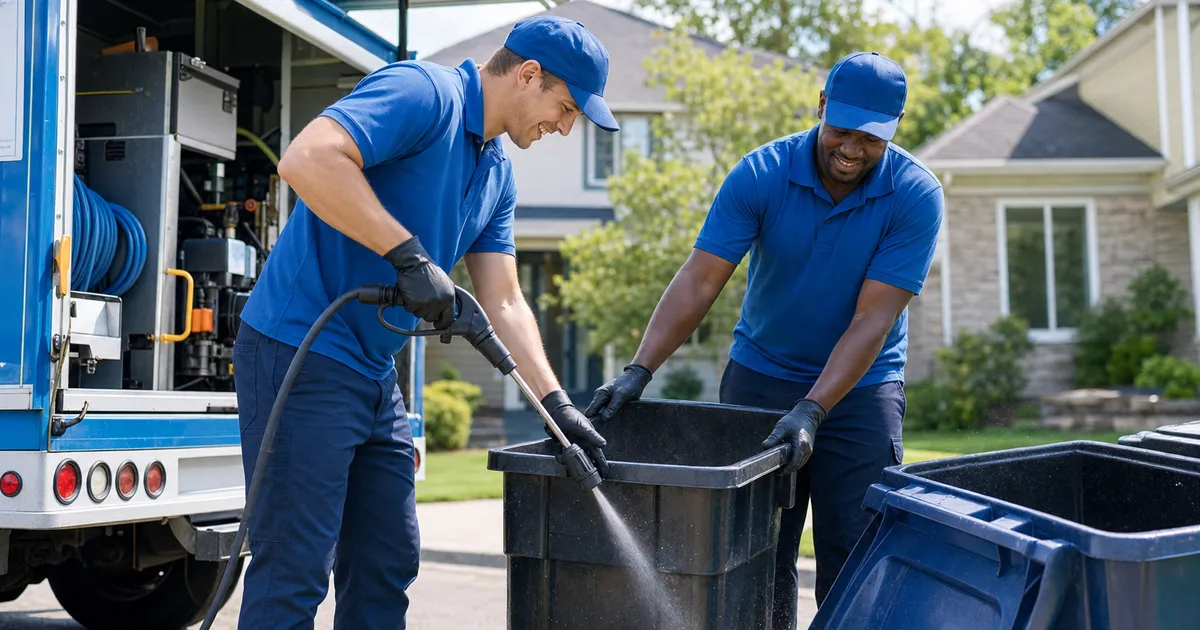
There's a moment in every trash can cleaning business where the owner realizes they've run out of hours. The route is full. The waitlist is growing. People two streets over are asking when you'll come to them, or whether you do the cans at the strip mall, or if you can add a second neighborhood across town. And the only thing standing between the business and its next level is the fact that there is one of you.
So you start thinking about hiring. And then you don't, because everyone you've ever talked to who brought on a helper has a horror story about it. The quality dropped. The customers noticed. The new guy didn't show up. The money split got awkward. The owner ended up doing more admin, not less.
Bringing on your first hire is the single highest-leverage move you can make in a trash can cleaning business, and also the easiest to get wrong. Here is how to do it in a way that actually scales the thing you've built, without blowing up the thing that made it work.
You're not hiring a worker. You're hiring your standards in a different body.
This is the mental shift most owners skip, and it's the reason half of first hires fail.
When you clean the cans yourself, customers aren't paying for a pressure washer. They're paying for you specifically. The way you leave the can spotless inside and out, not just rinsed. The way you remember that the house on the corner wants their cans put back against the garage, not at the curb. The way you reclaim every drop of the dirty water instead of letting it run down the gutter, because you actually care about the street you work on.
None of that is a certification. None of it is on a form. It's the thing your business actually sells, and you've never written it down anywhere. The moment a new hire shows up and does the route slightly differently, customers feel it. They can't always name what changed. They just know it isn't the thing they signed up for.
So before you look at applicants, you have to sit down and actually describe the way you clean. How you stage the rig. What you check before you call a can done. What you never do, like skipping the lid or leaving wastewater on the driveway. How you handle the house where the cans weren't put out. If you can't write that down, you can't hand it to anyone.
The operators who hire successfully don't find a helper and hope for the best. They build a short, honest checklist of how the route is run in their business specifically, and they train the new person against it. It takes an afternoon. It saves the next two years of your life.
Hire for the customers, not just for the wash
Knowing how to run a pressure washer tells you someone can blast grime off a can. It tells you nothing about whether they can stand in a driveway and talk to a customer who is clearly annoyed their cans got skipped last week.
The customer-facing half of this work is where new hires most often fall over. People who are great with the equipment sometimes freeze when a homeowner walks out to chat. People who are fast on the route sometimes never bother to learn which house is which. Customers notice this immediately, and they read it as a drop in the business, not a new guy finding his feet.
When you're interviewing, spend at least as much time on the people side as the cleaning side. Ask how they'd handle a customer who texts at 9pm saying their can still smells. Ask what they'd say to someone who forgot to put their can out and wants it cleaned anyway. Watch how they talk about jobs they've done before. If they talk about the customers like real people, that's a good sign. If they only talk about gear and gallons per minute, they'll clean fine and your customers will quietly miss you.
Start them small, defined, and slightly boring
The instinct is to throw the new hire straight onto the streets that are overflowing, because that was the whole reason you hired them. This almost always backfires.
A first hire needs a small, defined, slightly boring block to find their feet. One specific neighborhood, one trash day, one set of customers. Same route every week. Same rig. Same houses. They get to learn the rhythm, build the relationships, and make their mistakes in a single controlled stretch instead of a scattered one.
Once that block has been running for six to eight weeks without anything going wrong, you add the next one. A second street on the same day. Or the same neighborhood on a different trash day. You keep expanding slowly. What you don't do is hand them five neighborhoods across three trash days in their first month, because you will lose track of the quality and so will they.
The operators who do this properly end up, six months in, with a hire who runs a defined part of the route to the same standard they would. The ones who rush it end up doing their own job, the hire's job, and fixing the customer complaints on top.
Ride along first, lead second, solo third
Never put a new hire alone on the route on their first day. Ever. Even if they've cleaned cans before. Even if they came highly recommended.
The right progression is ride along, then lead with you there, then solo. In the ride-along phase, they come out with you and watch how you actually run the day. Not just the wash. The bits around the wash. How you set up the tank and the reclaim system. How you handle the house where the cans are still full. How you deal with the storm drain ten feet away. This is the invisible part the business runs on, and they have to see it before they can copy it.
Then they lead with you watching. They run the route while you stand back. They clean the cans while you check the work, only stepping in if something's going sideways. This is where you spot the gap between how they clean and how your business cleans, and where you give the feedback that actually sticks.
Only once both of those have happened, a few times over, do you let them run the route alone. By that point the customers have seen them. The houses are familiar. The service feels continuous rather than like a handover.
This sequence takes three to six weeks. Most owners try to skip it, and most pay for it afterward.
Pay them properly, and track it automatically from day one
Underpaying your first hire is the fastest way to make them quietly resentful, which is the fastest way to get sloppy cleans, which is the fastest way to lose customers.
Work out what you actually charge per clean, what your overheads are (water, fuel, disposal, wear on the rig), and what a fair rate looks like. Plenty of operators pay an hourly wage to start, then move to a per-stop or per-route number once the helper is fast and reliable, somewhere they can clear real money on a dense day. Whatever number you pick, pay it on time, every time, without being asked.
The admin trap here is real. Operators who manage this in a spreadsheet end up at the end of the month working out who cleaned what, adding up stops, cross-checking which houses got skipped, arguing over one missed street. Every single month. It's exhausting and it damages the relationship faster than almost anything else.
This is the other quiet reason to get onto a proper system before you hire. BookNimble gives you a shared schedule and route the hire can follow: a branded booking page where customers pick their plan and pay, automatic recurring Stripe payments, reminders sent before each clean so cans are out, and a dashboard showing exactly who is due and who has paid. Your hire opens the route for the day and sees every stop, in order, already paid for. No chasing, no arguing, no spreadsheet surgery. Ten minutes to set up, no monthly fee, and you only pay when you get paid.
The side benefit is visibility. You can see at a glance which streets got serviced, which neighborhoods are filling up, and where the business is actually growing. When it's just you, you don't need any of this. The moment there are two of you, you need all of it.
The customer relationship will catch you out if you're not careful
Customers who signed up because of you expect to deal with you. When a new hire shows up and starts answering texts, handling booking questions, and chatting at the curb, something subtle shifts. Some customers love it. Some quietly feel downgraded.
The fix is to introduce the new hire on purpose, not by accident. A short note to the relevant houses a week before their first run. A real introduction at the curb. A line on your booking page so customers know who they're likely to see. It sounds small. It changes the entire tone of the handover.
After that, split the communication cleanly. The new hire handles the day to day on their streets. You handle the bigger conversations, the pricing questions, anything that touches the relationship with the business. Don't hand all your customer messages off on day one. The relationship is part of the product, and customers want to feel like the owner is still around even when they're not the one running the rig that week.
Your first hire decides every hire after it
There is one more thing operators rarely realize until it's too late. The standard you set with your first hire becomes the ceiling for every hire after it.
If your first hire runs a rushed route and the customers accept it, that's now the bar. You'll never get above it with the next hire, because your business has been reset around what "a good clean" looks like, and it's dropped. If your first hire cleans to the same standard you do, that's the bar, and every hire after has to clear it.
This is why the first one is worth over-investing in. You don't need to hire the cheapest. You don't need to hire the person who can start tomorrow. You need to hire someone you'd be willing to compare your own work to, and then train them up to the point where the comparison is fair. Everything downstream of that is easier.
The bottom line
Hiring your first employee is the moment a trash can cleaning business stops being you and becomes a proper operation. Done badly, it's how good businesses go backward. Done properly, it's the move that turns a full route into actual growth.
Write down how you clean before you hire anyone. Interview for the customer side as much as the cleaning side. Start the new hire small, defined, and boring. Ride along, lead, solo, in that order. Pay them properly and let the software track it so nobody ends up resenting a month-end conversation. Introduce them to customers on purpose. Keep the owner relationship alive even when you're not the one on the route every week.
Get the first one right and the second one is three times easier. Get it wrong and you'll spend a year cleaning up what should have taken six weeks to set up in the first place.
You built a business people trust to keep their street clean. The whole point of scaling it is that more houses get the thing that made it work. A good first hire is how that happens. A bad one is how the business you've built gets quietly handed over to someone who was never going to run it the way you do.
Take the time. Hire the standard, not the availability. The rest of the business you're about to build depends on it.
Ready to grow your cleaning business?
Take signups, recurring payments, and reminders in one place with BookNimble.
Related Posts

How to Price Your Trash Can Cleaning Service Without Leaving Money on the Table
Most operators set their first price too low and stay on it for years. Here's how to price a trash can cleaning service so the route runs profitable from day one.

How to Run a Year-End Customer Appreciation Push That Locks In Renewals
A simple year-end thank-you is the cheapest retention you'll ever run. Here's how to use it to lock in plan renewals for next year on your trash can route.