How to Stop Losing Customers During the Slow Season
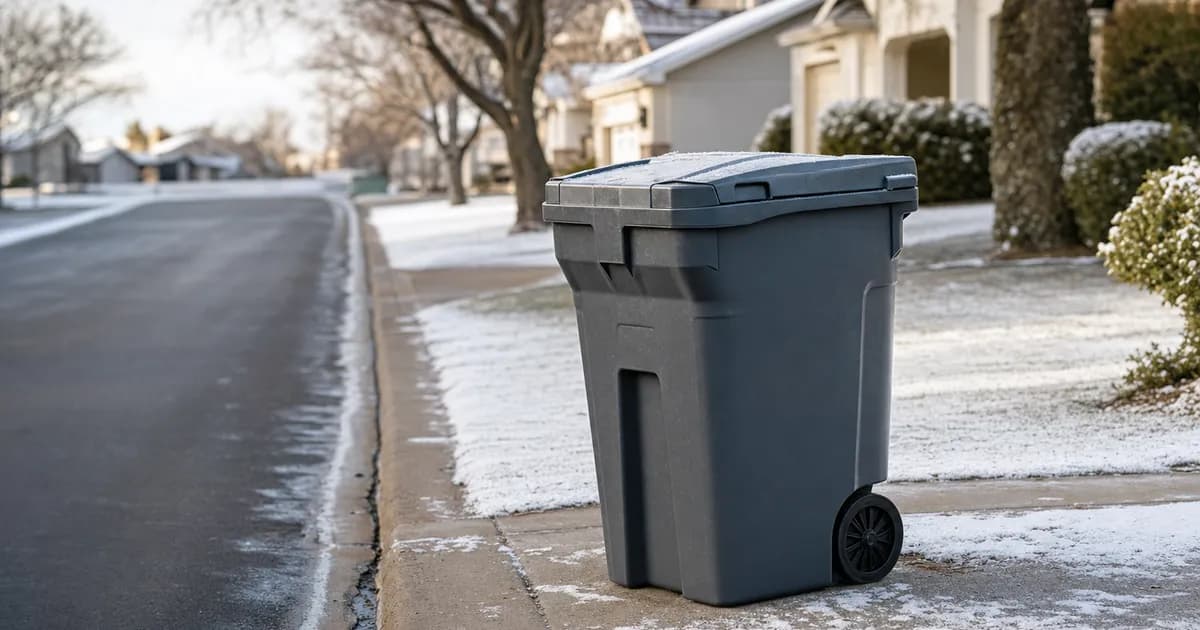
Every operator knows the texts. It's late October, the heat has finally broken, and one by one the same messages start landing. "Hey, can we pause for the winter?" "Cans don't really smell this time of year, we'll pick back up in spring." "Thanks for everything, we'll be in touch." Polite, friendly, completely reasonable. And every one of them is a hole in your route.
A few weeks later you're sitting with your coffee on a quiet morning trying to remember how many of those customers actually meant "see you in spring" versus "we're done." Some will come back. Quite a few won't reply when you reach out in March. A few did the polite ghost where they said they'd resume and then went silent. By the time the warm weather rolls around, a street that used to be full has gaps, and you're starting the busy season doing the door-knocking you thought you'd already done two years ago.
This is the slow-season drop-off. Almost every trash can cleaning business has it, and almost none of them treat it as the fixable problem it actually is.
The quiet months are where retention quietly dies
Most operators think of the slow season as a pause. The cans stop smelling, customers go quiet, the route picks back up when it warms up. Whatever happens in between is somebody else's problem.
The reality is that the cold stretch is the single highest-risk window in your year. It's a few months where a customer has time to think. Time to look at the household budget. Time to wonder whether they actually needed the service. Time to notice that the can really doesn't reek when it's forty degrees out. Time to see a cheaper operator's flyer in the mailbox. Time for the routine that held the plan together to quietly fall apart.
A customer who's used to leaving the can out every month from a normal warm-weather rhythm is on autopilot. A customer who has spent three months not thinking about it, not smelling anything, not seeing your truck, is making a fresh decision in spring. They didn't decide to cancel. They just stopped being on the rails that kept them paying.
The operators who hold their numbers through the slow months are not lucky. They've quietly built a slow season that stops customers falling off those rails in the first place.
Don't pretend the slow season isn't happening
The first mistake most operators make is treating the cold months like a thing to ignore. The last clean of the season goes by, the truck stays parked more, the before-and-after posts thin out, and the next thing most customers hear from you is a "spring cleans are back" text in March.
That gap is exactly where the trust dies. For three months the customer has heard nothing from you. The other operators in your zip code have not been quiet. The big national franchise has been running winter holiday promos since November. The pressure-washing guy who added cans to his lineup ran two driveway specials over the holidays. The new outfit that wrapped a truck in February already slid a flyer under your customer's door.
You don't need to match all of that. You just need to not vanish. A customer who hears from you once or twice across the slow months doesn't feel forgotten. A customer who hears nothing for a whole season quietly assumes you folded, because that's what their brain does to fill in a silence.
The fix is to plan the slow season like a stretch of its own, not as a hole between two busy periods.
Lock in spring before they leave for winter
The single highest-yield move is also the one most operators put off. Get customers committed to next season before the slow months start, not after.
The reason this works is purely psychological. In early fall, the customer is still in the rhythm. The can still gets cleaned every month. Your truck is still a known thing on the street. Saying yes to "the same plan straight through the winter" is essentially saying "leave things as they are." The friction is almost zero.
In March, the same conversation is a fresh decision. The customer hasn't thought about you in months. They're rebuilding their budget after the holidays. Saying yes is now an active choice in a week of active choices, and active choices are where operators lose customers to the cheaper outfit, the new truck on the block, or just "we'll skip it this year."
The mechanic doesn't have to be heavy. A simple thing works. Offer a year-round plan that simply bills through the slow months at a blended price that already accounts for the quiet weeks. Tell every customer at the curb on trash day and in a short text. Offer a small discount or a locked rate for anyone who stays on through the winter, set against a clear deadline before the cold hits. Most of the customers who were going to stay anyway will lock in. The ones who hesitate will tell you they're hesitating, and you'll have a chance to ask why before they disappear for three months.
An operator who locks in seventy percent of their route on a year-round plan before the slow season starts has solved most of the retention problem before the cold has even arrived.
Run something across the slow months, even if it's small
The biggest lie operators tell themselves about winter is that customers don't want any service in the cold months. Most of them still do. They want a different shape of service, but they very much want their cans handled.
The customer who is fine skipping a couple of quiet months still has a can that builds up grime, mildew, and that stale wet-garbage funk under the lid. They're not looking for a weekly clean in January. They're looking for a single deep clean before the holidays when family is coming over, or a "freshen up" right as it starts warming up, or a one-off that knocks down the worst of the buildup without committing to the full schedule.
A slow-season offering doesn't have to be a whole second business. It can be one seasonal deep-clean promo in late November and one in early March, run on your normal route. It can be a discounted single clean for anyone who normally pauses. It can be a "first clean of spring" booking that customers can grab on its own without resigning the whole year.
The wider point holds even if deep-clean promos aren't your thing. Anything you run across the slow months does two things. It earns you revenue in a window where your route would otherwise be silent. And it keeps the customers you already have inside the business while every other operator in your area is invisible to them.
The retention upside alone is usually worth more than the promo revenue. A customer who books one of your winter deep cleans does not have to make a fresh decision in spring. They were already a customer in January. They're still a customer in April. The decision is already made.
Stay in their feed, gently
The operators who handle the slow season best treat it as a content window, not a content holiday.
You don't need to post every day. You need to be visible enough that the customer scrolling on their couch in February remembers you exist. One post a week through the quiet months is plenty. A satisfying before-and-after from a deep clean you ran. A short clip of the hot-water wash blasting a season of grime out of a can. A reminder that spots are filling for spring. A throwback to a customer who's been on the route for two years. Anything that makes the thumb pause for a second.
The other quiet weapon is the text or email you send mid-winter. Not a sales blast. A friendly, short, written-by-an-actual-human note. Hope you're staying warm. Here's what's coming up when it warms back up. Here's the link to lock your spot if you haven't already. Reply right here if you've got any questions. Three short lines, sent on a weekday morning, will do more for your retention than three hours of redesigning your website.
The point isn't to nag. It's to make sure that when the customer eventually thinks "right, the cans are getting nasty again," your name is already front of mind, instead of lost behind whoever else has been louder.
Keep the payment relationship warm, not paused
This is the bit that quietly separates trash can businesses that grow from ones that yo-yo every year.
Most operators run on a stop-start model. The customer pays through the warm months, then pauses for winter, then maybe resumes in spring. Between those stretches, the payment relationship goes to zero. Every single spring you have to start the conversation again from scratch, including the conversation about whether they're coming back at all. Multiply that across your whole route and you've put yourself through a full sales cycle for the same customer every single year.
The operators who grow steadily have started moving toward a different shape. A monthly plan that simply continues across the slow season, at a blended price that already accounts for the quiet weeks. A quarterly plan that bills through winter without anyone having to "resume" anything. An annual plan billed in equal monthly payments, so the cost is the same in January as it is in July.
Whatever the shape, the principle is the same. The default is "still on." The customer has to actively cancel to leave, instead of actively re-decide to stay. That single change in default behavior does more for retention than almost any other lever in the business. The same customers, getting the same cleans, simply don't drop off as much because the system is no longer asking them to make a fresh decision every few months.
Done well this isn't a trick. The customer gets a better deal because they get a price spread evenly across the year, predictable payments, priority on the schedule, and one less thing to think about. You get a route that stops losing a chunk of its customers every fall.
This is exactly the kind of thing BookNimble is built to handle. You set up a year-round plan once, customers see it on your branded booking page, sign up, and pay. Stripe charges them automatically every month straight through the winter, reminders go out before each clean so they leave the can at the curb, and a dashboard shows you exactly who's due and who's paid. It takes about ten minutes to set up, there's no monthly fee, and you only pay when you get paid. The plan keeps billing through the quiet months so a customer staying is the path of least resistance, not a decision they have to make twice a year.
Re-engage before the busy season, don't just wait for the heat
The other half of the slow-season drop-off problem isn't really a slow-season problem. It's a spring problem.
A customer who hasn't seen your truck for three months is, in some real sense, a new customer again. The plan isn't top of mind. They've half-forgotten which day you come. They don't remember whether they were on monthly or quarterly. The operator who shows up in April assuming everyone's still locked in is the operator who finds out half the street quietly drifted off.
The operators who restart well treat the first weeks of the busy season almost like a fresh onboarding moment. A short note in late winter confirming the plan and the next clean date. A reminder the day before that first spring clean so the can is out. A friendly text the morning of for anyone who hasn't confirmed. A clean that first time that's a little extra thorough, so a customer who's been off the schedule for a season takes the lid off and thinks "oh yeah, this is why I pay for this" instead of "did they even come?"
The spring return is essentially a re-onboarding, and treating it that way is what turns "yeah we'll resume" into actually resuming.
Track who didn't come back, and ask them why
Most operators notice the drop-off in vibes rather than in numbers. The route feels a bit thin. A couple of streets have more gaps than they used to. There's a sense that some regulars haven't been on the schedule in a while. By the time the feeling becomes a number, you've already lost the chance to do anything about it.
A simple list, written down once a year as the busy season starts, fixes most of this. Take last year's active customers. Cross-reference them with this year's. Anyone on the first list who isn't on the second is a customer who has quietly gone, and you almost certainly haven't asked them why.
A short, warm, no-strings message to each of them is one of the highest-yield things you can do all year. "Hey, noticed we haven't cleaned your cans this season, hope everything's good. No pressure at all, just wanted to check in and see if there's anything we could've done better." You'll get three kinds of replies. Some will say life got busy and they'd love to restart, please send the link. Some will say they switched to another operator, and you'll learn something useful about your price or your timing. A few won't reply, and that's fine. The point isn't to win every customer back. It's to learn what's actually happening, and to recover the meaningful share of customers who were drifting rather than gone for good.
An operator who runs this exercise honestly every year gets two things. A handful of recovered customers. And a much sharper picture of where the route is leaking, which feeds straight back into how you run the next slow season.
Make the system do the remembering for you
The reason most operators don't do any of this isn't that they disagree with it. It's that running a slow-season promo, sending the mid-winter check-ins, locking in the year-round renewals, restarting in spring, and writing personal notes to lapsed customers is a stack of work that lands on top of actually running the route and having an actual life.
This is exactly the kind of work that proper booking software is built to absorb. Recurring plans that bill straight through the slow months without anyone logging in. Locked renewal rates that hold across the year. Reminder texts the day before each clean so cans get left out. Lapsed-customer lists pulled automatically from the booking data you already have.
You set the year-round plan up once. Customers sign up across the warm months. The seasonal deep-clean promo sits on the same booking page so existing customers can grab it without leaving the system. The reminder fires before each clean, slow season included. Anyone who paused but didn't resume surfaces on a "was a customer, isn't now" list automatically, ready for you to message in one tap. None of it lives in your head. None of it lives on a sticky note on the truck dash.
For most operators this is the difference between losing a third of the route every fall and barely losing anyone at all. The same customers, the same cleans, on a system that simply doesn't let people fall through the gaps that used to be invisible.
The bottom line
The slow season is not the dead time every operator quietly assumes it is. It's the highest-leverage retention window in your year, dressed up as a few quiet months.
The customers who don't come back in spring almost never made a deliberate decision to leave. They just slipped out of the rhythm during a stretch where nobody asked them to stay. Lock in the year-round plan before the cold starts. Run something small across the slow months so they don't fall out of the routine. Stay visible in their feed, gently. Move the payment relationship from stop-start to something that quietly continues. Re-engage before the busy season instead of waiting for the heat and hoping. Track who didn't come back and ask them why, kindly.
Do those things properly and the slow-season drop-off you've been quietly accepting for years just stops happening. The same route, the same cleans, on a system that doesn't make customers re-decide every few months, holds onto almost all of them. And spring starts looking less like a rebuild and more like the next chapter of a route that never really paused.
The customers were always going to come back. Most of them just needed staying to be easier than leaving.
Ready to grow your cleaning business?
Take signups, recurring payments, and reminders in one place with BookNimble.
Related Posts

How to Price Your Trash Can Cleaning Service Without Leaving Money on the Table
Most operators set their first price too low and stay on it for years. Here's how to price a trash can cleaning service so the route runs profitable from day one.

How to Run a Year-End Customer Appreciation Push That Locks In Renewals
A simple year-end thank-you is the cheapest retention you'll ever run. Here's how to use it to lock in plan renewals for next year on your trash can route.