How to Know When to Add a Second Truck to Your Route
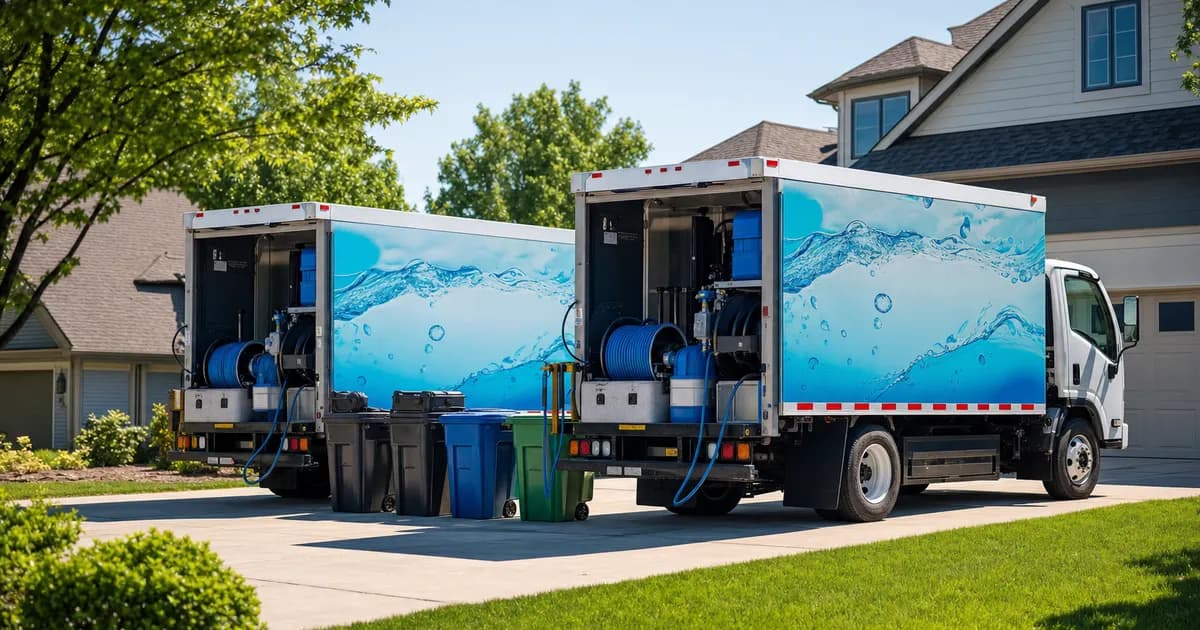
Every operator who's any good gets to the same junction eventually. The route is full. Trash day is packed bumper to bumper. A customer two zip codes over has asked for the fourth time whether you're ever going to come out their way. And on a quiet Sunday evening you find yourself pricing out hot-water pressure washers and reclaim tanks online, wondering how hard it can really be to run the same thing twice.
The honest answer is that it's much harder than running the first rig was, and at the same time it's the single biggest move you can make in a trash can cleaning business. A second truck, done properly, doesn't add fifty percent to your revenue. It can genuinely double it inside a year. A second truck, done badly, eats your weekends, drags down the quality on the original route, and leaves you running two half-empty trucks instead of one full one. The thing that decides which version you get isn't ambition. It's whether you added it for the right reasons at the right time.
Here is how to think about that decision before you've put money down.
Don't add a second truck until the first route is genuinely full
This is the rule almost nobody follows, and it's the single biggest reason second trucks fail.
A route feels full long before it actually is. You're out every weekend, the same streets are on the calendar, the Saturday run is busy, and the truck never sits idle. So you tell yourself you're at capacity, and the only way to grow is to buy a second rig. The reality is usually that you're working three days a week with a truck that could run six. You haven't filled the days you have. You've filled the days you happened to put yourself out on.
Before you go anywhere near a second truck, ask the harder question. Is there a weekday the truck sits in the driveway that you could be cleaning instead? Is there a neighborhood next to one you already cover where you've got a handful of customers asking? Is your route density still thin, customers scattered when they could be packed onto the same street? In nine cases out of ten the original route still has revenue sitting in it that the owner hasn't unlocked, usually because adding a day or tightening the route feels like more work and buying a truck feels like growth. The numbers say the opposite. Another full day on the truck you already own is the single highest-margin thing you will ever add to your business. A second truck is the single most expensive.
If the original route is genuinely full, every viable day booked and the streets packed tight, then you have a capacity problem and not a scheduling problem. Until that's true, the next day on the calendar is the answer, not the next truck.
Read the demand signal, not the headline number
Operators almost always justify a second truck by pointing at a number. There are eighteen people on the waitlist. Six customers in the next town have asked. Three neighbors of regulars said they'd sign up if I came out their way. These numbers sound concrete and they almost never are.
A waitlist is a soft number until it's been pressure tested. Eighteen names collected over a year, where nobody has paid anything and nobody has been given a start date, is worth a great deal less than four households that have signed up for a monthly plan on a specific trash day starting in three weeks. The first number is curiosity. The second is demand. Operators who buy a second truck on curiosity end up driving an empty rig in October. Operators who add one on demand end up filling it before it's even on the road.
The cheapest way to test demand before committing is to put the offer out, with a price and a start date, and ask people to commit. A signup page for a new route in the zip code you're eyeing, billing the first month up front. A simple post in the local Facebook group saying "if we ran a route in this neighborhood on Thursdays, who wants in at this price." If you get ten signups, you have a route. If you get two, you have a waitlist that was never going to convert. Either way you've spent a week and learned what would otherwise have taken you a season, a truck payment, and a few thousand dollars to find out.
The hidden costs that quietly wreck the math
Most operators plan a second truck on the same back-of-an-envelope math they used for the first one. Cans per day, price per can, fuel, profit per stop. The trouble is that the first truck's math includes none of the costs that only kick in when you run in two places.
A second truck means a second hot-water unit, a second reclaim tank, and a second set of everything that breaks. It means fuel and maintenance on two vehicles instead of one. It means dead miles, the time someone spends driving from one neighborhood to another instead of cleaning, and the inevitable day the route runs long and a customer's can doesn't get done. It means a second set of new-customer questions from people who don't yet know how any of it works.
It also means the original route gets less of your attention. The owner who used to know every customer on the first route is now half-present on both. Quality usually slips on the original before it improves on the new one. By the time you notice, you're firefighting two routes instead of building one.
When the math is done properly, including a driver's time at proper rates, the equipment, the fuel and dead miles, and a realistic ramp-up of three to six months before the new route fills, a second truck is rarely profitable in its first quarter. The operators who plan for that don't panic when the new route is half full in week three. The ones who don't, sell the truck.
A second truck is a route-density problem more than a cleaning problem
This is the part owners skip almost universally. The first route grew on word of mouth and luck. Happy customers told neighbors, the before-and-after clips did the selling, you were the obvious choice on those streets. None of that exists in the new neighborhood yet. To the households there, you're a stranger with a truck.
A second route needs the same demand build you did for the first one, compressed into a few weeks. Posts in the new neighborhood's Facebook group. A free clean or two on the busiest streets so the before-and-after does the talking on trash day, when every can is out and filthy and the problem is staring everyone in the face. A few targeted Instagram posts tagged in the right area. The whole game is density: many customers on the same street on the same day, not a scatter of stops across a town you have to burn fuel to reach.
The operators who treat a new route as a cleaning project end up with a shiny second truck and four stops on it. The operators who treat it as a demand project end up with a packed route by week six because they did the work in the four weeks before launch, not the four weeks after.
Hire first, or truck first
There are two ways to expand and they're genuinely different businesses.
One option is to add a second truck that you personally run. Same operator, same quality, same person the customer talks to, just on a different day in a different neighborhood. This protects the standard. It also caps the business at the hours in your own week, which is the problem you were trying to solve when you started thinking about a second truck in the first place. You add revenue but you add the same amount of work to an already full schedule, and inside six months you've recreated the burnout at twice the scale.
The other option is to add a second truck that a hire runs. This is genuinely scalable. You stay on the original route, the hire takes the new one, and the business runs two trucks in two neighborhoods. The hard part is that you need someone good enough to run a route on their own, do the job to your standard, reclaim the wastewater properly, and represent you to customers you'll never meet. That's a much higher bar than a helper who rides along on your truck. Most operators bring on their first hire to help on the home route, then move a strong second person to lead the new one. That order matters. Putting a brand new hire in charge of a brand new truck in a brand new neighborhood is asking the business to fail in two directions at once.
If you don't have someone ready to run a route, you don't have a second truck yet. You have a hiring problem to solve before you buy anything.
Run the new route as its own thing, not a clone
A common mistake is to launch the second route as if it were the first one again. Same days, same prices, same schedule, same everything. The owner reasons that what worked once should work again. The reality is that the new neighborhood has different pickup days, different household density, different income levels, and different expectations. Cloning the original doesn't transfer the success, it just transfers the assumptions.
A second route is best treated on its own terms. The brand is the same, the standard is the same, the confirmation texts are the same, the system is the same. But the cleaning day follows that neighborhood's actual trash day, not the one that works on your home route. The plans you push might bend to what the local market will pay. An operator who launches a Thursday route because that's trash day on the home turf, only to find the new neighborhood gets picked up Tuesday, will spend a season wondering why the truck is half empty when the answer is just that the day was wrong.
A clean way to start is to launch one day a week on whatever the strongest trash day looks like in that area, pack it tight, and only add a second day on the new route once the first is genuinely full. This is the same rule that should have applied to the original route. It applies twice as hard to the second one.
The numbers that tell you to go, and the ones that tell you to wait
If you want a simple framework, this is the one most growing operators end up at after they've done it the messy way once.
You're probably ready to add a second truck when the original route is at genuine full capacity across at least four days a week, when you have real signups (people who've actually paid to start, not just names on a list) clustered in a specific second neighborhood, when you have a hire already running cleans on the original route to your standard, and when you have enough cash to fund three to six months of a below-capacity route without it putting the original under pressure.
You're probably not ready when any of those isn't true. If you've got open days on the original route, fill those first. If your waitlist is soft, pressure-test it with a real signup before you buy. If you don't have someone who can run a route, hire and train that person before you start shopping for trucks. If a slow launch on the new route would crush cash flow on the old one, wait one more quarter and bank the runway.
The operators who expand at the right moment double their business in twelve months and barely notice the disruption. The ones who expand a quarter too early spend a year unwinding the damage. The decision looks the same on the day you make it. The conditions underneath are completely different.
Make the system carry the second route, not your head
The reason most operators put off a second truck, even when the demand is real, is that the admin already feels uncontainable with one. Doubling that load sounds like a recipe for never sleeping again. And if the underlying system is a phone, a notebook, and a payment app, they're right.
This is the bit where proper software stops being a nice-to-have and becomes the difference between a clean expansion and a chaotic one. BookNimble runs multiple routes out of one place, each with its own schedule, its own cleaning days, its own driver assigned, its own reminders before each clean, and a single dashboard showing both routes side by side: who's due, who's paid, and who's been cleaned. Customers in the new neighborhood sign up for their plan and pay through a branded page without ever knowing the original route exists. Recurring billing runs automatically through Stripe on both. You see the whole business as one operation. It takes about ten minutes to set up, there's no monthly fee, and you only pay when you get paid. The original route doesn't get worse because you added a new one, because the system, not you, is what's holding it all together.
The operators who run two trucks on the same software they ran the first one on tend to be the ones who go on to run three. The ones who try to scale a route on top of a manual setup usually pull the new truck down within a year and convince themselves the demand wasn't really there. Almost always, the demand was real. The system underneath it wasn't.
The bottom line
A second truck is the most powerful and the most dangerous move in a trash can cleaning business. Done well, it's the step from a side hustle to a real company. Done badly, it's the step from a clean, profitable single route to two half-broken ones.
Fill the first route properly before you go looking for a second. Test the demand with real signups, not soft interest. Do the math with all the hidden costs, not just the price per can. Build the demand in the new neighborhood before you launch, not after. Hire and grow someone who can run the second route so you stay focused on the first. Treat the new route on its own terms with its own trash day, not as a clone of the original. Run both routes on the same system so the admin doesn't double when the revenue does.
Do those things and the second truck lands cleanly, fills inside a season, and quietly pays for the third. Skip them and you'll spend a year running twice as hard for the same money you used to make on one route.
The right second truck, added at the right moment, is the move that turns a trash can cleaning business into a real one. The wrong one, added too soon, is the move that very nearly ends it. Almost everything that separates the two happens before you've spent a dollar.
Ready to grow your cleaning business?
Take signups, recurring payments, and reminders in one place with BookNimble.
Related Posts

How to Price Your Trash Can Cleaning Service Without Leaving Money on the Table
Most operators set their first price too low and stay on it for years. Here's how to price a trash can cleaning service so the route runs profitable from day one.

How to Run a Year-End Customer Appreciation Push That Locks In Renewals
A simple year-end thank-you is the cheapest retention you'll ever run. Here's how to use it to lock in plan renewals for next year on your trash can route.