How to Land a Recurring Commercial Contract (HOAs, Restaurants, Property Managers)
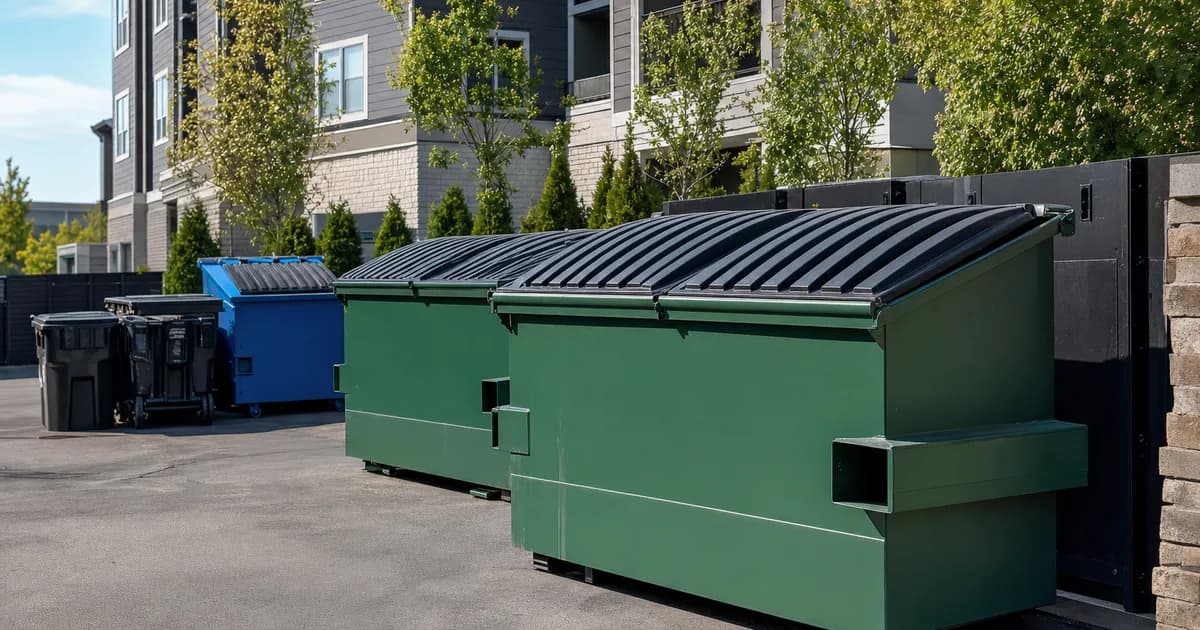
Every operator has the same daydream at some point. You walk into the HOA office at the front of the neighborhood on a Monday morning, the property manager says yes please, and within a month you're cleaning the cans for every unit in the complex, on the same day, billed automatically, and finally not having to chase one driveway at a time to fill out a route.
Then most operators never quite get round to actually doing it. The HOA feels like a closed door. You don't know who to call. The one time you tried, the front desk took your number down and nobody called back. So you keep blasting one residential can at a time off your Instagram leads, and the complex keeps using whoever has hauled their cans to the curb for the last six years, and the dream stays a dream.
It shouldn't. Commercial accounts are the single fastest way to grow a trash can cleaning business in your area, and most of them are quietly looking for someone better than the one they have now. Here is how to actually go and get one.
Why one commercial contract changes everything
It's worth being clear about why this matters so much, because operators sometimes treat the commercial side as a nice extra rather than the main lever it is.
A single recurring contract with an HOA, an apartment complex, or a restaurant row is somewhere between twenty and a hundred cans, every month, for the whole year, paid for on one invoice by an organization that already has a budget for keeping the property clean. That is more revenue from one stop than most operators make from any of their scattered residential customers, with almost none of the marketing cost. You don't have to find the houses. The property has them, in one place, on the same trash day, already used to a service truck showing up.
It also changes how the rest of your business looks. The contract becomes your route anchor. Once you're the company cleaning the cans at the big complex on Oak Street, your residential signups in that neighborhood fill faster, your seasonal deep-clean promos sell without you needing to advertise them, and the new leads start coming in with "I saw your truck at our building" already attached.
One commercial contract done well does more for a trash can cleaning business than any amount of before-and-after content. Two contracts done well is the difference between a side hustle and a real business.
Pick the right account, not the closest one
The first instinct is to pitch the nearest big property and move on. Often that's wrong.
The right first account is the one most likely to say yes, not the one geographically closest to your truck. That usually means a property where you have some warm thread already. An HOA where you clean a board member's can privately. A restaurant owner who is a regular residential customer. A property manager who remembers your before-and-after photos from the neighborhood group. Any small bridge into the building is worth more than a cold pitch to the complex down the road.
If you genuinely have no warm threads, pick by need rather than zip code. Properties with cans that obviously stink, restaurants with grease-caked dumpster enclosures, HOAs with no cleaning provider at all, or a current provider clearly past its sell-by date, are dramatically easier to win than a property with a long-standing contract running well. You can usually find this out in five minutes by driving past on trash day and looking at the state of the cans, or asking any resident what's on offer.
The mistake operators make is going for the biggest, fanciest property first because it sounds like a trophy. Those accounts have ten vendors a month knocking on the door and a manager who has heard every pitch a hundred times. The smaller, less obvious complex next door has none of that, and is delighted when someone competent walks in. Win one. Then use it to win the bigger one next year, with a full route and a reference behind you.
Know what you actually offer the property
Before you walk into any property, decide what you're offering them. Not in your head. Written down on a single page.
The manager does not want to hear about your equipment philosophy. They want to know what they're saying yes to. The day. The frequency. The number of cans or dumpsters. The price per can per service. The length of the agreement. Where the invoice goes and how it gets paid. What you do if pickup runs late. What insurance you carry. How you handle the dirty wastewater so it never hits a storm drain on their property. What happens if you damage something.
A property can say yes to a one-page proposal in a single conversation. They cannot say yes to a vague "I'd love to come talk about cleaning your cans sometime." If your offer requires the manager to make ten decisions for you, the answer will be "let me think about it," which is the polite version of no.
The cleanest first offer is small. One service a month. The cans for one building, or one section of the complex. A three-month trial, not a full year. A clear price per can that makes sense both to the residents and to the property's budget. Easy to say yes to, and easy to renew if it works. Once you've run one month cleanly, the property will happily expand it.
Get to the right person, not the front desk
This is the part most operators get wrong, and it decides whether you ever get a real conversation at all.
The front desk of a property management company is staffed by people who are protecting the manager from exactly the kind of email you are about to send. Generic enquiries about "cleaning your trash cans" go into a folder that gets emptied when somebody has time, which is never. If your only contact is "info at the management company dot com," you'll wait six months and hear nothing.
The right person is one of three people, depending on the property. The community manager at an HOA. The regional property manager or building manager at an apartment complex. The owner or general manager at a restaurant. Find the actual name. The management company's website usually lists the team on a "contact" page. If not, a single phone call to the office, asking specifically "who handles vendors and property maintenance," gets you a name in thirty seconds.
Then you write directly to that person. By name. Short. Specific. Something like, "Hi Maria, I run a local trash can cleaning company. I drove past your property on trash day and noticed the cans behind Building C are in rough shape and you don't currently have a cleaning service. I'd love to put a proposal in front of you. I've attached a one-page summary. Could I stop by for fifteen minutes one afternoon next week to walk you through it." No long story. A specific gap, a specific offer, a specific ask.
This email gets answered. The generic one doesn't.
The first meeting: bring proof, ask questions
Treat the first meeting as a meeting, not a chat. Bring a printed copy of your one-page proposal even if you've emailed it. Bring your insurance certificate, proof you reclaim and dispose of the wastewater correctly, and before-and-after photos from real jobs you've done. Have the prices, the schedule, and the format already decided so you're confirming, not negotiating from scratch.
Then ask the property what they actually want.
Most operators walk in and talk for twenty minutes. The ones who win do the opposite. Ten minutes of you, twenty minutes of the property. Which day works around their pickup schedule. How many cans and where they're located. Whether they want every unit done or just the common enclosures. Whether the property pays you on one invoice or residents pay individually. Whether they want a free demo on a few cans before they commit.
Almost every property has small, non-obvious preferences that, if you adapt to them, make the difference between an awkward account and an easy one. The operator who says "great, that's no problem, I'll work around your hauler's schedule" wins over the one who insists on running it the way they run their residential routes.
Two things to confirm before you leave. The exact date of the first service, and who is telling the residents it's happening, and what that message says. Without those nailed down, the project quietly drifts and three weeks later nothing has happened.
Pricing the commercial deal
Pricing for a commercial contract is its own thing, and most operators get it slightly wrong in one of two directions.
The first mistake is undercharging because you're so excited to win the account that you offer a "commercial rate" well below what your residential cleans cost. Six months in, you're running the biggest stop on your route for less per can than a one-off driveway clean, and you can't put the price up because you set the precedent.
The second mistake is pricing it like a single residential clean and ignoring the volume. A complex with eighty cans at six dollars a can is four hundred and eighty dollars from one stop, with the truck parked in one place the whole time. You don't need to charge what you charge for one can across town. You can charge less per can and earn far more per hour, because the property has solved the route density for you.
The clean answer is to pick a per-can price that's an obvious yes for the property, sits comfortably below your one-off residential rate, and produces an hourly figure you'd be happy to repeat every month for the rest of the year. For most trash can cleaning businesses that lands somewhere between five and ten dollars per can per service, with a small discount for signing a longer agreement up front. Bill monthly on a contract, not per can as you go, because per-clean billing means the account drifts and the count is different every visit.
Sometimes the property will want to bundle the cost into resident fees, especially if their office is handling the billing. Work with it. The property collecting from residents and paying you on one clean invoice is almost always worth it, because it makes you part of the property's normal operations rather than an outside vendor chasing eighty individual payments.
Handle the admin before day one
This is where commercial accounts quietly fall apart, and where most operators end up looking unprofessional in front of the property they wanted to impress.
Service reminders get sent late, so half the residents never roll their cans out and you can't reach them. The first visit has eighty cans on the list and only forty actually out at the curb. Payments come in by check from the office for one building, by individual card for a few residents, and not at all for the rest. The list of which units are on the plan is on a piece of paper in your truck that you've already lost by week three. A resident calls the property furious because their can was skipped and nobody has a record of whether they're even on the route.
None of this is the property's fault, and it's the first impression that decides whether you get a second month.
Set the admin up before day one. Every can on the contract has a record, a paid plan, a confirmation, and a reminder going out the day before each service so they get rolled to the curb. The route is on your phone and updates the moment a can is done. You know who has paid, who hasn't, which unit each can belongs to, which residents have special instructions, and which cans are recycling versus trash.
Property managers talk to each other. The manager who saw your first month run cleanly mentions it to the manager at the complex across town. The one who watched you scramble with a paper list in week two will not. The admin is not the boring part of the commercial deal. It's the part that decides whether one contract becomes three.
The first month is the trial, run it like one
Treat the first month as a trial that you, not the property, are running.
What that means in practice is that the bar in the first few visits is higher than your normal bar. You show up exactly when you said you would. You arrive early. You learn the property's layout in the first week, not by week six. You send a short, friendly note to the manager after each visit, even if it's just "all eighty cans done today, photos attached." You walk the property the first month and flag anything you noticed, not just blast and leave.
The point is that the manager and residents who experience that first month are the people who will tell every other property and neighbor whether your service is good. If the manager tells the regional office "yeah, it was fine I guess," you'll lose the renewal. If they say "the cans look brand new, the operator is great, we should add the other buildings," you'll have an expanded contract before the quarter is out.
You earn the second month in the first three weeks of the first one. Run those weeks like they decide whether the next year of your business exists, because they do.
Turn one contract into three
Once you have one commercial account running well, the second is dramatically easier than the first. The third is dramatically easier than the second. By the time you've got three properties on the books in the same area, managers start contacting you rather than the other way round, because property managers talk to other property managers and your name comes up.
The mistake at this point is to chase volume too quickly. The operator who tries to add four new contracts in their second year usually ends up with four half-run accounts and one disappointed original property, because the quality dropped at the moment you tried to scale.
The right move is to add accounts at the rate at which you can keep your standards up. That usually means one new contract per quarter, not four per year, until you've added a second truck or a crew member who can take some of the existing ones off your plate. Each new account is a project. The pitch, the meeting, the resident rollout, the first month. By year three, a trash can cleaning business that started at one local property is usually servicing five or six, running a second truck, and has a name strong enough that properties come asking.
How a proper system makes the commercial side actually work
The reason the commercial project sounds intimidating from the outside is that you're picturing yourself doing all of it manually. Eighty resident reminders. A route on paper. Payments by check and card and not-at-all. Confirmations typed out by hand on a Sunday night. Service records in a folder somewhere. The first month turns into a second job on top of your actual route, and by week six you're running on coffee and quietly hoping the property doesn't notice the cracks.
The right tool removes almost all of this. BookNimble gives you a branded booking page for the contract, with the plan up at a fixed price, the right number of cans on the route, payment taken automatically through Stripe every month, and a real schedule that shows exactly who is due. Reminders go to every resident the day before each service so the cans are at the curb. Cancellations and changes follow the policy you've set, automatically. Every can on the contract has its own record, so you always know what's covered and who's paid. Communication runs from the system, not your personal phone, so the property never has to play middleman. Special instructions are captured at signup so you have what you need before day one. When you add a second contract next quarter, you set it up the same way rather than starting from scratch.
For most operators, the difference between a commercial account that quietly grows into the backbone of the business and one that falls apart in the first month is exactly this layer of admin. The cleaning is the easy part. The system is the part that makes the rest of it possible.
The bottom line
A commercial contract is the single fastest way to grow a trash can cleaning business, and most operators never quite get round to going after one because the door feels closed and the front desk doesn't reply.
It isn't closed. It's looking for somebody competent. Pick an account where you have a warm thread or where the gap is obvious. Write to a real person by name with a one-page proposal. Show up to the first meeting prepared, listen more than you talk, and adapt to how the property already works. Price the deal so you're earning a good rate per hour without making yourself the cheapest option in town. Set the admin up properly before day one and run the first month like the trial it is, because the property and the residents in those first weeks are deciding whether your service becomes the default.
Win one. Run it cleanly. Use the proof to win the next one. Add new contracts at the rate you can keep the standards up, not at the rate your enthusiasm wants. Lean on a system that handles the route, payments, reminders, and records so you can spend your time cleaning rather than catching up on admin.
Do this once, properly, and you go from being an operator who hopes for one-off bookings to one who is part of the local properties' monthly rhythm. The scattered route that used to be one driveway here and one across town there is now eighty cans in one parking lot, paid in advance, every month of the year.
That is what a trash can cleaning business looks like when the properties are on your side. Steady, full, and growing without you ever having to post another before-and-after.
Ready to grow your cleaning business?
Take signups, recurring payments, and reminders in one place with BookNimble.
Related Posts

How to Price Your Trash Can Cleaning Service Without Leaving Money on the Table
Most operators set their first price too low and stay on it for years. Here's how to price a trash can cleaning service so the route runs profitable from day one.

How to Run a Year-End Customer Appreciation Push That Locks In Renewals
A simple year-end thank-you is the cheapest retention you'll ever run. Here's how to use it to lock in plan renewals for next year on your trash can route.