How to Pick the Right Neighborhoods to Service (and When to Drop One)
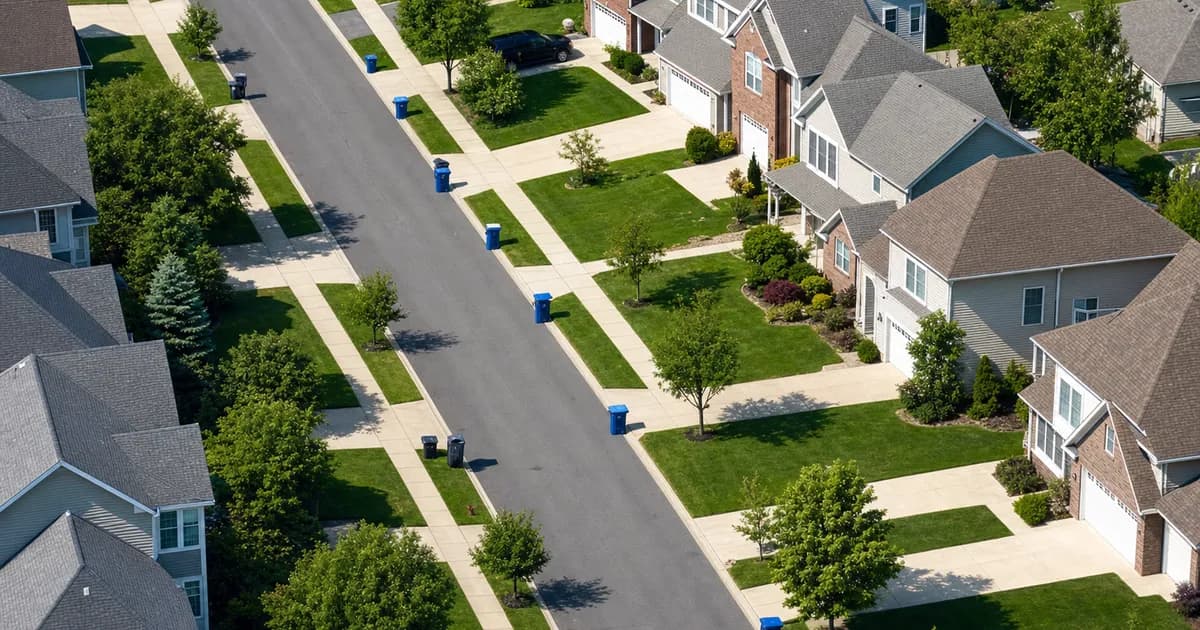
Almost every operator has the same Monday morning at some point. You sit down with a coffee, look at the week ahead, and realize you're running your truck across four different neighborhoods. Two subdivisions on opposite sides of town, one stretch of older homes you picked up off a Facebook post six months ago, and a handful of stragglers in a zip code you can't even remember signing. The first neighborhood is solid. The second one keeps shrinking. The older homes are spread so far apart you burn half a tank getting between them. You've got six customers on a Tuesday route that barely covers your gas, and a Thursday cluster on the far side of the county that you can't expand because there aren't enough houses around it.
Nobody planned this. You didn't sit down two years ago and choose four neighborhoods. The first one was where you got your first customer. The second was a friend who lived across town and told a couple of neighbors. The third was a cold knock that turned into three signups. The fourth got added because somebody asked and you said yes. Each individual decision made sense at the time. The whole thing together is a mess.
This is the neighborhood problem, and it quietly costs every growing trash can cleaning business thousands of dollars a year and the owner a meaningful chunk of their sanity. Here is how to think about neighborhoods properly, so the chaos stops and the business actually scales.
The neighborhood is the second biggest decision in your business
The cleaning is the first thing. After that, almost nothing affects your operation more than where you do it.
The neighborhood decides who signs up. Work a subdivision of three hundred homes on the same trash day and you'll fill a route in a couple of weekends. Chase customers scattered across the whole metro and you won't build a real route for love or money, no matter how clean your before-and-afters look. People buy this service the way they buy lawn care or pool service. Convenience and social proof win. A street where four neighbors already use you sells the fifth house on its own. A lonely customer in a zip code with nobody else around stays a single stop forever.
The neighborhood also decides what you can charge. A subdivision with newer homes and two cars in every driveway will pay thirty dollars a month for a recurring plan without blinking. An older area where money is tighter taps out at eighteen, and half of them cancel the first cold month. Same operator, same hot-water rig, almost half the revenue per stop, because the neighborhood set the price for you the day you started knocking.
And the neighborhood decides whether you can scale. A street where you clean ten cans in an hour with one stop after another is a profitable hour. Ten cans spread across ten miles is a whole morning and most of a tank. The same business at the same hour, with the route density doing two and a half times the work, because the neighborhood allowed it.
Operators who treat the neighborhood as a logistical detail end up running their business in whatever area happened to sign up first. The ones who treat it as a strategic choice quietly out-earn them year after year.
What you're actually paying for when you take on an area
Most operators judge an area by the rate they can charge in it. Thirty dollars a month here. Twenty there. The cheap part of town is fifteen.
The rate is a small part of the real number. The true value of an area is the rate minus the drive, minus the setup and teardown at each stop, minus the time you lose hauling and reclaiming wastewater between houses that are nowhere near each other, minus the share of stops that fall through because somebody forgot to put the can out or moved without telling you. An area where you can charge twenty-five a month but the houses are a mile apart is worse than an area at twenty a month where you clean six cans without moving the truck more than a block.
Operators almost always run the first math and miss the second. Once you've worked out the profit per hour on the route, not the price per can, half your neighborhood decisions look different.
This matters most when an area starts giving you grief. Operators put up with extraordinary amounts of nonsense from a neighborhood because the headline rate looks good. Customers who never leave the can out. HOAs that suddenly decide your truck needs a permit. Long empty stretches between stops that eat a morning. Each of these costs you time, fuel, and the rhythm that makes a route profitable in the first place. You should not be pouring hours into an area that does this to you, no matter how good the per-can price looks on paper.
Pick neighborhoods for the customers you want, not the street you live on
The first instinct when you start out is to work the blocks around your own house. That's natural. It's also usually wrong.
The right neighborhood is wherever the customers you want are clustered tightly enough that one trash day fills a morning. That might be the subdivision down your road. It might be a newer development two towns over, because three hundred homes there all go out on the same Tuesday and your own street is a scattered mix of pickup days. The geography you build your business on is not your geography. It's the geography of route density.
Spend half an hour with a map and your city's trash pickup schedule before you commit to an area. Which neighborhoods are big, dense, and on a single trash day. Where are the newer subdivisions with two-income households who'll happily pay for the convenience. Which streets have an HOA that might block you and which have one that might bless you with a group deal. Which zip codes are filling up with young families and which are quiet and aging.
Operators dramatically underestimate how big a difference this makes. An area that's wrong by a quarter mile, in the sense that the houses are just spread out enough to kill your stops-per-hour, can quietly cap your business at half its potential. An area that's right by the same quarter mile fills itself almost without marketing, because every clean is a billboard for the four neighbors watching.
The right early neighborhood is rarely the one outside your front door. It's the one where thirty future customers are sitting on the same street on the same trash day.
The math nobody does on route cost
Once a quarter, sit down and run a single number on every area you service. Profit per hour on the route.
Take what you bill for the route in an hour. Subtract your fuel, your water, your time, and the cost of moving between stops. A street where you clean twelve cans an hour without leaving the block is a high-margin hour. A scattered route where you clean five cans an hour and drive two miles between each is a money-loser, because once you factor in gas, your time, and the wear on the truck, you're underwater on every stop.
This is the number that tells you whether an area is working. Not whether it feels busy. Not whether the customers are nice. Not whether you personally like driving out there. Just, how much does each can on this route actually cost you to clean, per hour, in dollars and cents.
The exercise tends to surface two or three uncomfortable surprises every time. The route you thought was your best one quietly isn't, because the houses are spread out and it costs more to run than the tight one across town. The new area you took on six months ago that only ever filled to forty percent of the street is actively dragging the business backward. The neighborhood you nearly dropped last summer is, on the numbers, the most profitable morning in your week.
Operators who run this number twice a year almost always change something within the next month. Operators who never run it keep hauling the rig across town to areas that quietly stopped being worth the drive.
Negotiate the access nobody negotiates
Subdivisions and HOAs are more open to a deal than most operators think. Most operators never ask, because nobody told them they were allowed to.
An HOA or a property manager is a customer with three hundred homes behind them. A trash can cleaning business that shows up every month on the same day is not a one-off. It's a regular vendor with predictable value, and a lot of HOAs will let you set up a booth at a community event, send a flyer in the newsletter, or get listed as a preferred vendor if you ask directly. Some will negotiate a group rate where the HOA promotes you to the whole neighborhood in exchange for a discount. One conversation with a property manager can be worth fifty cold knocks.
Water access is the other thing nobody asks for. If you're refilling your tank across town between routes, you're losing thirty minutes and a chunk of your morning every trip. A lot of subdivisions, businesses, or friendly customers will let you fill up from an outdoor spigot for next to nothing if you simply ask, and it keeps you on the route instead of driving back and forth. The operator who plans water and reclaim around the route runs a much tighter morning than the one who improvises it.
The other thing worth pushing for is a clear understanding on trash day timing. If the city changes a neighborhood's pickup day, your whole route schedule moves with it, and you want to hear that from the HOA or the city before your customers do. Ask to be on the notification list once, get it set up, and the next time a holiday shifts pickup you already know instead of showing up to cans that are still full.
The conversation is uncomfortable for about thirty seconds the first time. After that it becomes part of how you open up a new area. Operators who never ask treat every neighborhood like a cold street of strangers. Operators who do get the whole community handed to them and tend to get treated as the trusted local vendor rather than a random truck nobody recognizes.
The signs an area has stopped working
Every trash can cleaning business has, at some point, an area that has quietly stopped earning its place. The trick is noticing before another six months go by.
Three signs are usually enough.
The first is route shrinkage. A neighborhood that used to be eighteen stops on a Tuesday is now nine, with no obvious reason why. The customers didn't all move. They liked the service. The route just slowly emptied out, and the area is the most likely culprit. Maybe a competitor started working the same streets. Maybe the city changed the trash day and you lost the density. Maybe new construction stalled and the subdivision never filled in the way you bet it would. Whatever it is, the trend is the area telling you it's done.
The second is a steady stream of small problems. Cans that are never out. Customers slow to pay. People asking why your truck wasn't there last week when you were three streets over the whole time. Operators dismiss this as background noise. It usually isn't. Customers tolerate a few hiccups in an area they otherwise like, and quietly cancel when those hiccups pile up. By the time three different households in the same week are short with you, several more have already mentally checked out.
The third is the math getting harder. Fuel up, water trips up, stops per hour down. The route that used to pay for itself by nine in the morning now runs till noon for the same money. The area is telling you, by the numbers rather than by words, that it no longer earns its place on the schedule. You can either grind through a losing route every week or put that energy into a neighborhood that actually rewards the drive.
When two of these three are happening in the same area, the neighborhood is on the way out. The only question is whether you move first or wait for it to fall apart and lose the customers who were still worth keeping.
How to drop an area without losing the customers worth keeping
This is the part most operators get wrong, and it's why they cling to dying routes for years longer than they should.
The fear is reasonable. The customers on the area you're about to drop are real recurring revenue. If you lose all of them at once, you've hurt the business worse than the bad route was hurting it. So the easier choice is to keep limping out there, and the years go by.
The fix is sequence. Don't drop the area and then figure it out. Figure it out, then drop.
Look at who's actually worth keeping on that route. The handful of good, paying, easy customers in a dying neighborhood are usually willing to stay if you simply tell them you're shifting their clean to a different day that fits a route you still run nearby. Then write to every customer there with a clear, specific message. From the first week of September, your monthly clean is moving from Wednesday to Friday so we can keep serving your street. Same plan, same price, same crew. Here's the new schedule. Nothing else changes for you.
Don't give people a long explanation about the area or the economics. They don't need it. Don't apologize. The move keeps their service running, and your tone should reflect that. Send the message four to six weeks out, send a reminder a couple of weeks before, and mention it directly to the good customers when you see their cans on the curb in the final weeks.
Done this way, you keep the customers worth keeping and quietly let the unprofitable scatter go. The ones who drift away were the long drives and the no-can-out problems anyway, and you've now freed up the morning to fill a tighter neighborhood that was never going to fit while the bad route ate your week.
Adding a new neighborhood without breaking the routes you've already got
Once an area is working, the temptation is to add another one as soon as you can.
Sometimes that's right. Sometimes it's the move that takes a clean, profitable route and turns the whole week into chaos. The difference is whether you've finished the first neighborhood before starting the second.
A finished neighborhood, in the sense that matters here, is one where the streets are dense with customers, the trash-day schedule is stable, the route runs tight, and you've got more signups coming in than you can fit on the existing day. That is the moment to add another area, because the demand is there to fill it.
An unfinished neighborhood is one where you've still got half-empty streets, a handful of houses that haven't signed yet, and gaps in the route you're driving past every week. Adding a second neighborhood while the first is unfinished doubles your drive time and your wastewater logistics without adding much revenue, because you're now running two half-empty routes instead of one full one.
The same logic applies in reverse when an area has clearly hit its ceiling. A subdivision where you've signed nearly every house that will ever say yes is full. The way to grow from there is not to keep flyering the same streets, because the neighbors who were going to sign already have. The way to grow is a second neighborhood, in a different part of town, with its own dense cluster on its own trash day. Same logic, different zip code.
Most operators add areas one stage too early. Wait until the existing neighborhood is genuinely full and you'll build a much smoother second route than the one you'd cobble together while you were excited.
How a proper system lets you reshape routes without losing customers
The reason neighborhood decisions feel so heavy from the inside of a trash can cleaning business is that, on a manual setup, every route change is a small operational nightmare. Customers have to be moved one by one. Schedules need rewriting. The recurring billing needs to follow each person to their new day. Reminders have to point at the right trash day. Half your customers will text you confused, and the half that don't will leave their cans in on the wrong week.
The right tool removes almost all of this. BookNimble gives you a branded booking page where customers see your plans, sign up, and pay, and a dashboard where you can see exactly which neighborhoods and routes are performing. When you shift a route from one day to another or move a customer to a different cluster, their plan and their automatic Stripe payment move with them. The reminders before each clean update to the new day automatically, so the customer who never checks their calendar still gets the can out at the right time. New neighborhoods come on with all the same booking, recurring billing, and reminder setup as the rest, in a few minutes rather than a few weeks. It takes about ten minutes to set up, there's no monthly fee, and you only pay when you get paid.
For most operators, this is the difference between treating routes as fixed because the cost of changing them is too high, and treating routes as something you can reshape the moment density shifts or an area stops earning its place. That flexibility is what lets the business actually grow instead of staying stuck in the streets it happened to start on.
The bottom line
The neighborhoods you service are one of the few decisions in a trash can cleaning business that quietly compound for years. Get it right and the routes fill themselves, the per-hour economics work, and the business grows almost without marketing. Get it wrong and you can do beautiful work at a fair price for years and still feel like you're going backward.
Pick neighborhoods for the customers you want, not the street you happen to live on. Run the profit per hour on every route twice a year and act on what you find. Negotiate access with the HOAs, water with the locals, and trash-day notice with the city, because almost nobody else does and neighborhoods quietly reward the operator who asks. Notice the signs that an area has stopped working before another six months pass, and move the customers worth keeping with a clean, simple message rather than a long apology. Add new neighborhoods only when the existing ones are genuinely full, and put the whole route on a system that lets a schedule change happen without breaking the signups, the billing, or the reminders.
Do this once, properly, and the neighborhood side of the business stops being a permanent low-grade headache. The Tuesday you used to dread, because of the drive and the scattered stops and the half-empty street, becomes the morning you most look forward to. The losing route at the dying subdivision becomes a memory. The map is small, deliberate, dense, and quietly profitable, and you spend your mornings cleaning cans rather than burning fuel between them.
That is what a trash can cleaning business looks like when the neighborhoods are working for you instead of the other way round. Steady, dense, and built on a small number of areas that you actually chose.
Ready to grow your cleaning business?
Take signups, recurring payments, and reminders in one place with BookNimble.
Related Posts

How to Price Your Trash Can Cleaning Service Without Leaving Money on the Table
Most operators set their first price too low and stay on it for years. Here's how to price a trash can cleaning service so the route runs profitable from day one.

How to Run a Year-End Customer Appreciation Push That Locks In Renewals
A simple year-end thank-you is the cheapest retention you'll ever run. Here's how to use it to lock in plan renewals for next year on your trash can route.