How to Run a Trash Can Cleaning Business Around a Full-Time Job
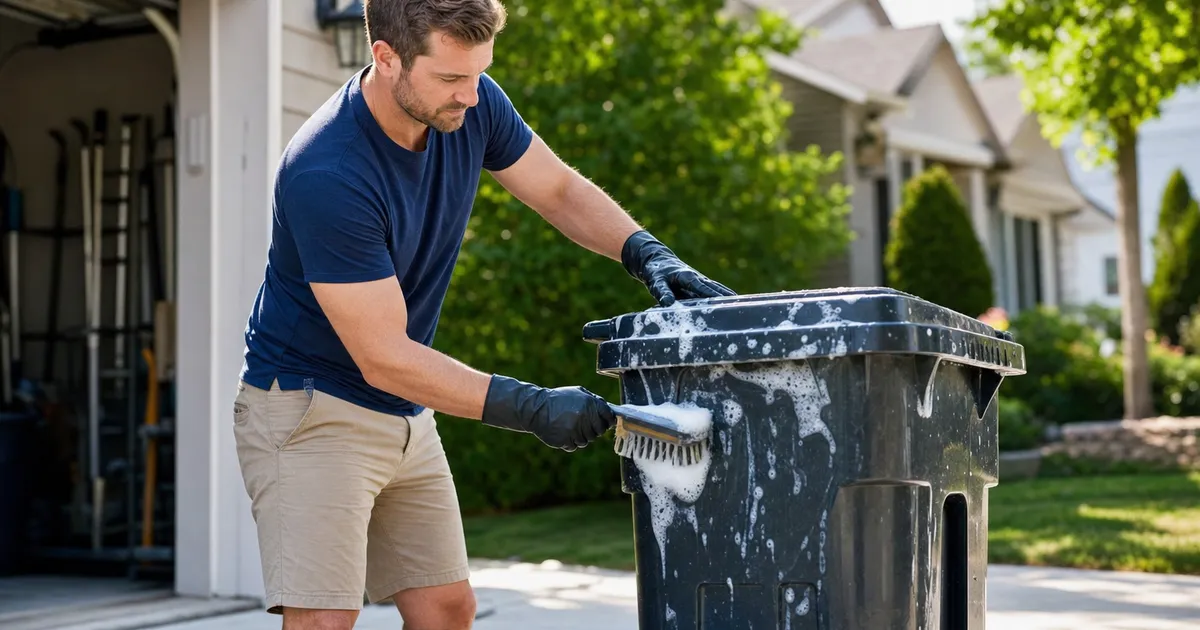
The vast majority of trash can cleaning businesses do not start with someone quitting their job. They start with someone blasting out a few cans on a Saturday morning next to a regular nine-to-five, telling themselves they will go full time once it's properly working, and then quietly waking up two years later with thirty customers, a job they're tired of, and no clear path between the two.
This is the most common trash can cleaning business in the country and the one talked about least. Almost every operator you admire was here once. Some are still here now, several years in, running the route on the side because going full time feels too risky and staying small forever feels too small.
Here is the honest version of how to run a trash can cleaning business around a full-time job. Not the romanticized one where you grind for six months and then magically quit. The actual one, where you stay sane, the route grows steadily, and the leap, when it comes, is something you can see from a long way out.
The version of you doing both is the constraint, not the demand
The first thing to accept is that the bottleneck is never the demand. There are always houses in your area with cans that reek in the summer heat, and plenty of those people would pay you if they knew you existed. The bottleneck is the human being trying to run a route after work, chase payments on the bus, and still show up sharp at the day job on Monday morning.
Operators who treat the business as if they had unlimited hours end up running a chaotic version of it. Customers scattered across four neighborhoods. Signups by text at random hours. A schedule they cannot see and cannot control. They burn out before the route has had a chance to actually grow.
The operators who grow steadily while still working a day job are the ones who treat their own time like the scarcest resource in the company. Every decision starts from the same question. Does this fit inside the hours I genuinely have, or does it pretend I have hours I do not. The pretending version is what kills part-time trash can businesses, not lack of effort.
Pick the smallest possible footprint that still earns real money
A common instinct when starting out is to take every customer who calls. One can across town. A commercial dumpster pad twenty minutes the other way. A one-time deep clean on the far side of the county. Four different stops, four different drives, four different setups. Inside three months you have built yourself a second full-time job that pays a fraction of what your first one does, and most of the money is going into the gas tank.
The operators who actually scale start the opposite way. One neighborhood. One trash day. One clear plan. They turn other things down deliberately, even when the money looks tempting, because they know the spread will quietly destroy them.
A single neighborhood where you clean thirty cans on the same trash day, all on a recurring monthly plan, is a perfectly reasonable shape for a part-time trash can business. It can earn good money. It fits inside the energy of someone with a day job. It can be grown later by adding more houses on the same streets, not by inventing new routes across the city.
If you cannot describe your part-time route in a single sentence, it is too sprawled. Tighten it before you grow it.
Treat your evenings like contract hours, not free time
The operators who burn out fastest are the ones who let the business bleed into every spare hour. Texts get answered during dinner. Nozzles get ordered during a lunch break. New customer inquiries happen in a meeting room with the door closed. Every gap in the day quietly fills up with admin.
This feels productive. It is actually how you end up exhausted at the day job and exhausted at the route at the same time, which is the worst of both worlds.
The fix is to define your cleaning hours like a real job, even if it is only six or eight hours a week. The Saturday morning you actually run the route. A short admin block on Sunday morning. Maybe a thirty minute slot on Wednesday lunchtime to send any replies. That is the business. Outside those hours, it does not exist. Texts can wait. Researching a second neighborhood can wait. Posting that before-and-after clip can wait.
This is the only way the day job stays workable and the route stops feeling like a permanent low grade emergency. A part-time business does not need full-time attention. It needs sharp attention inside narrow hours, and silence outside them.
Stop selling one-off cleans when your time is this tight
If you are running a trash can route on weekends while doing something else during the day, you do not have the bandwidth to chase one-off bookings from thirty individual households every single week. Every week of "did the Smiths book again, did the Patels want a clean this time, does anyone on Oak Street need me" is a week you cannot afford.
This is exactly the problem recurring plans were built for. A monthly plan billed automatically. A quarterly plan for the houses that are fully committed. The customer decides once, signs up once, and the can goes out on trash day on its own schedule from then on. You stop having weekly conversations about whether they want you this round. The route becomes a list of committed customers instead of a stack of weekly maybes.
The same logic goes for seasonal deep-clean promos. A part-time operator who runs one well-planned spring promo a year is a part-time operator with a meaningfully different income. A promo front-loads a wave of signups into a single decision and earns more per stop than a routine clean. It is also one of the few things you can push hard in the warm months, when cans smell worst and people care most.
The shape of a sustainable part-time trash can business is almost always recurring plans plus a seasonal promo, with a small layer of one-time deep cleans at a premium price for the really bad cases. Selling one-off cleans as your main product is a structural mistake when you only have ten hours a week.
Get the boring stuff off your plate before it eats your evenings
The single biggest difference between an operator who stays small forever and one who eventually goes full time is what they do with admin.
The operator who stays small handles everything by hand. Signups come in by text. Payments come in by Venmo or cash left under the lid. Reminders go out from their personal phone. A skipped week gets sorted out in a back and forth that takes ten replies and three days. After a couple of years they have a hundred conversations a week happening in their pocket and no idea what is actually going on in the business.
The operator who grows hands all of that to a system the moment it starts to feel like a chore. Signups happen on a page. Payment is taken at signup and then every month automatically, not chased afterward. Confirmations go out on their own. Reminders fire the day before so cans are actually at the curb when the truck rolls up. The operator turns up, cleans, and goes home.
This is the part where proper software stops being a nice idea and starts being the only way the business survives around a day job. BookNimble was built with exactly this operator in mind. The branded booking page lives at one URL you can drop in your Instagram bio. Customers see your plans, sign up, and pay in a couple of taps. Recurring billing runs automatically through Stripe, so the money lands every month without you lifting a finger. Reminders go out before each clean, and a dashboard shows exactly who is due and who has paid. Ten minutes to set up, no monthly fee, and you only pay when you get paid. The whole evening admin block that used to take an hour after work is replaced with about five minutes of glancing at the dashboard once a week.
For an operator with a day job, this is not a luxury. It is the difference between still doing this in two years and quietly giving up because the admin has eaten all the joy out of it.
Charge what a part-time business needs to charge
A specific trap part-time operators fall into is pricing as if they were running this for fun. Ten dollars a can, no plan premium, no deep-clean tier, undercutting everyone in the zip code. The thinking is that they are not full time, so they should not charge full time prices.
This is exactly backwards. A part-time operator has fewer hours than a full-time one, so each stop has to earn more, not less. If you are cleaning thirty cans a week instead of a hundred, you cannot afford for any of them to be priced at a side hustle rate. The whole point of going part-time first is that the work has to pay enough to make leaving the day job worth it eventually.
A clean way to think about it is to set your part-time pricing where you would set it if it were full-time. If you would charge twenty dollars a month per can running this five days a week, charge twenty dollars a month running it on weekends. Customers do not know your full schedule. They are paying for a clean can, not a percentage of your week. The only person undercharging because of your day job is you.
Use the day job as cover, not as a ceiling
Here is something almost no trash can cleaning advice talks about. Having a day job while you build the route is not a weakness. It is a structural advantage that lets you make better decisions than your full-time competitors.
A full-time operator who needs the next signup to pay rent will say yes to any customer, any neighborhood, any drive, any rate. They have to. The pressure flattens their judgment. They take on the house twenty minutes off the route, the customer who haggles every clean, the dead street with one can on it, because they cannot afford not to.
An operator with a day job has the luxury of saying no. No to the customer who is clearly going to be a headache. No to the neighborhood that wrecks your route density. No to the one-off that does not fit your trash day. The route stays cleaner because the financial pressure is somewhere else for now. Used properly, this is how you build a business that is more profitable per hour than most of the full-timers around you, well before you ever leave your job.
The operators who waste this advantage are the ones who pretend they are already full time and panic at every empty slot. The ones who use it well treat the day job as a runway that lets them be picky, and they end up with a route that is worth leaving the day job for.
Plan the leap, do not gamble on it
The hardest decision in a part-time trash can business is when to go full time, and most operators make it badly in both directions. Half jump too early on emotion and a single good month, then panic when the slow season hits and end up cobbling together a half job to plug the gap. The other half wait too long, treating it as a hobby for so many years that they never actually transition at all, even though the numbers would have allowed it eighteen months earlier.
The cleaner approach is to set the financial bar in advance and then judge against it honestly. Most operators need their part-time route to be earning at least 70 percent of their day job income, consistently, for at least six months, before they should think about jumping. Not one good month. Six months of repeatable recurring revenue, with a route that is genuinely dense and new customers still signing up.
You also need a clear plan for what changes when you go full time. More neighborhoods on more trash days. A second truck or a wrapped rig. Commercial accounts during the week, when the day job used to be. A seasonal promo every quarter instead of once a year. The reason it is worth jumping is that there is upside on the other side, not just freedom from the day job. If your full-time plan is just "do exactly what I'm doing now but with extra free time", the math almost never works.
When the bar is hit and the plan is real, jump cleanly. Until then, run the part-time version like a proper business, and let the numbers tell you when it is time.
Protect the day job for as long as you need it
The final thing, and the one operators feel guilty about, is that the day job deserves your attention while you still have it. Treating it like a placeholder, dragging on Mondays because you are tired from the Saturday route, missing things at work because the business is in your head, is the fastest way to end up with neither.
A day job that pays you well while the route grows is one of the most valuable things you have. Honor it. Show up properly. Hit your deadlines. Keep your relationships there strong. Not just because it is the right thing to do, but because if the route has a difficult quarter, that day job is your safety net, and you do not want to be looking for a new one with a stack of bad reviews behind you.
The operators who handle this best treat the two as completely separate worlds. Day job hours, full attention to the day job. Route hours, full attention to the route. No bleed in either direction. It sounds obvious. Almost nobody actually does it.
The bottom line
A trash can cleaning business built around a day job is not a smaller version of a real one. It is its own thing, and the rules are different. Time is the constraint. Energy is the constraint. The week has to be drawn tight on purpose, the pricing has to do extra work because there are fewer hours of it, and the admin has to be off your plate from the start, not added on once it gets bad.
Pick a small footprint. Sell recurring plans, not weekly maybes. Charge full price even though you are part time. Use software to handle every confirmation, payment, and reminder so your evenings stay yours. Keep the day job sharp until the numbers honestly tell you it is time. And stop apologizing for being part time, because half the most respected trash can routes in the country were built exactly like this.
The leap, when it eventually comes, is the easy part. The two years before it are where the real work is. Build the part-time version properly and the full-time version will already be there waiting for you.
Ready to grow your cleaning business?
Take signups, recurring payments, and reminders in one place with BookNimble.
Related Posts

How to Price Your Trash Can Cleaning Service Without Leaving Money on the Table
Most operators set their first price too low and stay on it for years. Here's how to price a trash can cleaning service so the route runs profitable from day one.

How to Run a Year-End Customer Appreciation Push That Locks In Renewals
A simple year-end thank-you is the cheapest retention you'll ever run. Here's how to use it to lock in plan renewals for next year on your trash can route.